Thamel, Kathmandu, Nepal
Everest Base Camp Trek Cost 2026/27: A Complete Budget Breakdown
Standing at Everest Base Camp beneath the world's highest mountain is a dream for trekkers from around the globe. But before you lace up your boots, one practical question needs answering: how much does the Everest Base Camp trek cost?
For 2026/27, the total cost of an Everest Base Camp trek can vary considerably depending on your trekking style, trip duration, season, group size, accommodation preferences, and whether you choose a guided package or arrange the trek independently. Your budget needs to cover more than just the advertised trek price—permits, flights or transportation, accommodation, meals, guides and porters, travel insurance, equipment, tips, and unexpected expenses can all add to the final amount.
How much does the Everest Base Camp trek cost?
Most trekkers should plan for roughly USD 1,800 to USD 3,600 per person all-in for a 12–14 day guided trek from Kathmandu. That range covers permits, Lukla flights, guide and porter support, teahouse rooms and meals, insurance, gear, tips and a safety buffer. A lean group trek can land nearer USD 1,500, while private or premium trips can pass USD 4,000. Every figure here is an estimate unless it is marked as an official fee.
Ask ten agencies about the Everest Base Camp trek cost and you will get ten different numbers. That is not because someone is hiding something. A package price can include flights or leave them out. It can include a porter or not. It can cover three meals a day or only breakfast and dinner. Two quotes that look USD 400 apart may simply be pricing different trips.
Note: If you are still deciding on dates, our guide to the best time to trek Everest Base Camp pairs well with this one, because season affects both price and flight reliability.
Six things move the total more than anything else:
| Category | Typical estimate (per person, from Kathmandu) | What it usually means |
|---|---|---|
| Budget | USD 1,300–1,900 | Larger group, shared guide, little or no porter, basic teahouses, gear rented, simple food choices |
| Standard guided group | USD 1,800–2,800 | Licensed guide, shared porter, twin-share teahouses, permits, most costs organised for you |
| Private guided | USD 2,500–3,800 | Your own guide and porter, flexible pace, private transfers, more comfort |
| Premium/luxury | USD 3,500–5,500+ | Upgraded lodges, small groups or private, sometimes a helicopter return |
Note: These ranges are estimates that include the personal spending, gear, insurance and buffer that package prices often leave out. They are not quoted package prices. Published package prices from Nepali operators in 2026 commonly fall between roughly USD 1,250 and USD 2,500 depending on what is included.
| Cost item | Estimate (USD) | Type |
|---|---|---|
| Permits (two required) | About 45 (NPR 6,000) | Fixed |
| Kathmandu accommodation (2–3 nights) | 50–240 total | Variable |
| Lukla flights (return) | 350–500 (plus Ramechhap transfers if applicable) | Variable |
| Guide | 25–45 per day | Variable |
| Porter | 20–35 per day | Variable |
| Trail accommodation | 5–15 per night at most stops; 50+ in upgraded lodges | Variable |
| Food and drinks | 20–40 per day (up to about 50 with heavy snacking) | Variable |
| Travel insurance | 60–250, depending on age, nationality and cover | Fixed once chosen |
| Equipment/gear | 0 if you own it; 80–350 rented; 600+ bought new | Optional/variable |
| Wi-Fi and charging | Charging about 2–7 per device; Wi-Fi about 3–5 per day | Optional |
| Hot showers | About 2–5 each, more at altitude | Optional |
| Tips | 110–250 for guide and porter combined | Customary |
| Emergency/contingency | 250–500 (about 15% of the trip) | Buffer |
| Miscellaneous | 100–250 | Optional |
You book pieces separately: flights, permits, a guide, rooms as you go. It can be the cheapest route on paper. The trade-off is time, coordination and risk. You handle flight bookings yourself, and delays are your problem to solve.
Guide rules are worth checking. Nepal announced in April 2023 that foreign trekkers must hire a licensed guide through a registered agency in national parks and conservation areas. Sources differ on how this applies in the Khumbu, with some operators saying local authorities allow independent trekking and others saying guides are now checked.
Note: Verify the current position with the Nepal Tourism Board or the Khumbu Pasang Lhamu Rural Municipality before you plan a self-arranged trek. A licensed guide is also a genuine safety asset at altitude.
The most common choice for first-timers. Permits, a licensed guide, usually a shared porter, and accommodation are organised for you, and the guide and porter costs are split across the group. Limitations: a fixed pace and itinerary, and you may be paired with strangers.
Your own guide (and often your own porter), a pace set around you, and easier handling of delays. It costs more because you carry the full guide and porter wages alone.
Upgraded lodges with private bathrooms in places like Namche Bazaar, better dining, and sometimes a helicopter return from Gorakshep or Lukla. Note that lodge quality drops sharply above about 4,500 m regardless of budget, because supplies and infrastructure are limited.
Foreign trekkers need two permits totalling about NPR 6,000 (roughly USD 45):
NPR 3,000 for Sagarmatha National Park and about NPR 3,000 for the Khumbu Pasang Lhamu Rural Municipality permit.
| Permit/fee | Cost (foreign nationals) | Who needs it | Where to get it |
|---|---|---|---|
| Sagarmatha National Park entry permit | NPR 3,000 (NPR 1,500 for SAARC nationals) | All trekkers entering the park | Nepal Tourism Board, Kathmandu, or the Monjo park gate |
| Khumbu Pasang Lhamu Rural Municipality permit | NPR 3,000 (raised from NPR 2,000; some sources list a lower SAARC rate) | All trekkers in the Khumbu | Lukla (and Monjo per some sources) |
| Gaurishankar Conservation Area permit | NPR 3,000 | Only for the traditional Jiri approach | Shivalaya or Nepal Tourism Board |
The TIMS card is not required in the Khumbu.
Note: Check the Nepal Tourism Board park entry fee page before your trip.Permits are paid in Nepali rupees. They are non-refundable, so confirm your dates first. For a fuller walkthrough, see our Everest Base Camp trek permits guide.
How much is a flight to Lukla?
Expect roughly USD 175–255 one way for foreign nationals, or about USD 350–500 return. Prices differ by airline, departure airport, season and booking channel. Treat these as typical estimates, not fixed fares.
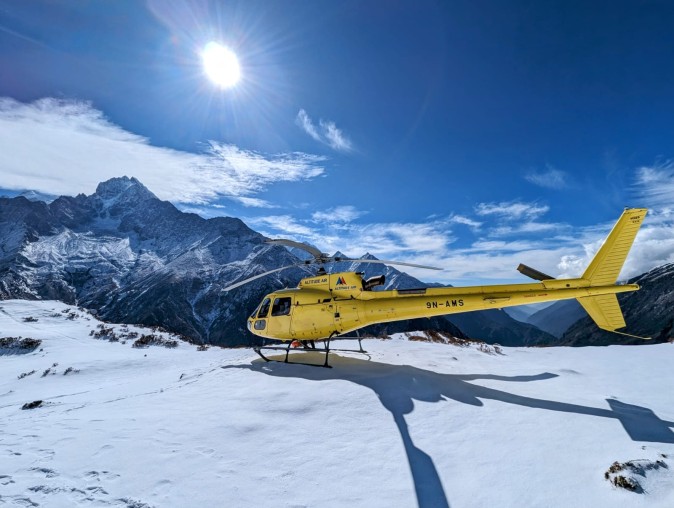
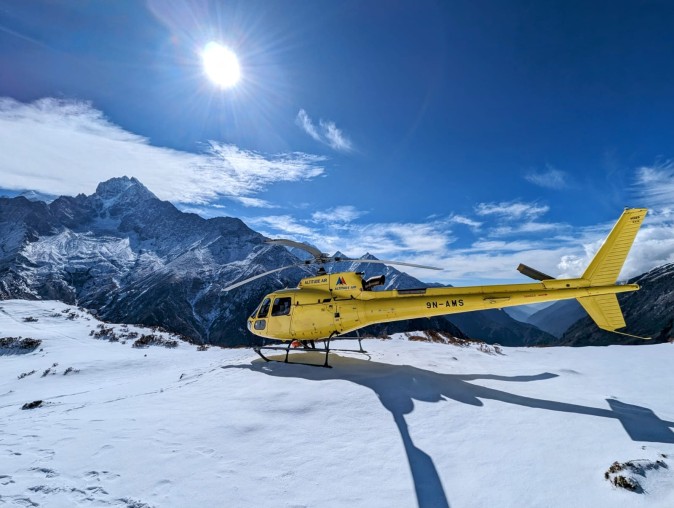
Lukla's short runway sits at about 2,860 m and flights run under visual conditions, so cloud and wind cancel flights. A delay costs money in three ways: an extra hotel night (roughly USD 30–80 with meals), possible rebooking costs, and a knock-on effect on your international flight. Helicopters can sometimes fly when planes cannot, which is why some trekkers keep cash or a flexible plan ready. Plan buffer days on both ends of the trek.
Most trekkers stay in simple teahouses with twin rooms and shared toilets. Rooms are often cheap, or even close to free, on the understanding that you eat your meals at the lodge. The price of everything else rises with altitude.
| Zone | Typical room (twin, per night) | Notes |
|---|---|---|
| Lukla to Namche Bazaar | USD 3–10 | Most choice; upgraded lodges with attached bathrooms are available in Namche |
| Tengboche to Dingboche | USD 5–12 | Simple rooms, shared bathrooms, colder nights |
| Lobuche to Gorakshep | USD 7–15+ | Basic, crowded in peak season, limited hot water |
| Upgraded/luxury lodges | USD 50+ | Mostly in lower villages |
Estimates from 2026 operator sources; rooms vary by lodge and season, and some sources report higher rates.
How much does food cost on the Everest Base Camp trek?
Plan for about USD 20–40 per day for three meals and hot drinks, and up to USD 50 if you order snacks, imported items and extra drinks. Prices rise with altitude because supplies are carried in by porters and yaks.
Start with USD 25 for the lower days, USD 35 for days above Dingboche, then add USD 5–10 if you drink coffee, buy snacks or want dessert. Multiply by your food days.
Note: If your package includes meals, deduct those meals and budget only for extras.
| Item | Typical estimate |
|---|---|
| Licensed guide, daily wage | USD 25–45 per day, commonly split among the group |
| Porter, daily wage | USD 20–35 per day |
| Porter capacity | Typically 20–25 kg total, often shared between two trekkers (about 10–12 kg each) |
| Guide/porter food, lodging, insurance | Usually covered by the agency in a package; separate if you hire directly |
| Transport | Their flights and transfers are usually included in agency pricing |
| Tips (customary) | About USD 70–150 for a guide and USD 40–100 for a porter over a full trek, given at the end |
Note: These are not fixed rates. They depend on experience, season, group size and the agency's pay structure, and any price quoted online is a market estimate rather than a guarantee.
Equipment and Gear Cost
| Items | Buy new (estimate, USD) | Rent in Kathmandu | Tier |
|---|---|---|---|
| Trekking boots | 80–250 | Not recommended; buy and break in | Essential |
| Down jacket | 150–400 | About 1–3 per day | Essential |
| Sleeping bag (rated for cold nights) | 150–350 | About 1–3 per day | Essential |
| Thermal layers, gloves, warm hat | 60–200 combined | Buy | Essential |
| Headlamp | 20–60 | Buy | Essential |
| Backpack (30–40 L), trekking poles | 60–200 combined | Poles rentable | Recommended |
| Sunglasses (high UV), water bottle | 30–100 combined | Buy | Recommended |
| Duffel bag, water filter, extras | 20–100 | Duffel often provided by agencies; confirm | Optional |
Renting versus buying: Renting bulky items you will use once (down jacket, sleeping bag, poles) saves money. Buy anything that touches your body or needs to fit perfectly, especially boots. Inspect rented items for zip damage, hygiene and warmth before you leave the shop.
Note: Trekking agencies rarely provide personal gear. You either bring it, buy it, or rent it in Kathmandu's Thamel district. Our Everest Base Camp trek packing list covers what to bring in detail.
Insurance for high-altitude trekking should cover emergency evacuation by helicopter and medical treatment up to at least the highest altitude of your route (Kala Patthar is about 5,550 m). A helicopter evacuation can cost thousands of dollars, which is why agencies and many trekkers treat cover as effectively non-negotiable.
Set aside a separate buffer of roughly 10–15% of the trip cost, about USD 250–500, for delays, extra hotel nights, unplanned transport and weather disruption. This is money you may not spend, but you will be glad it is there. More on getting ready is in our Everest Base Camp trek preparation guide.
These are the items that turn a comfortable budget into a tight one.
| Hidden cost | What to expect (estimate) |
|---|---|
| Extra Kathmandu hotel nights | Flight delays and early returns commonly add 1–2 nights, roughly USD 30–80 each with meals |
| Flight delays and rebooking | Reschedule fees may apply; extra lodging and meals while you wait |
| Ramechhap transportation | About USD 20–30 per person each way when not included |
| Charging and power banks | USD 2–7 per device charge; a power bank cuts repeated charging |
| Wi-Fi | Around USD 3–5 per day in many lodges, less reliable higher up |
| Hot showers | USD 2–5+ each; often unavailable at the highest stops |
| Snacks and chocolate | Cost more at altitude; a small stock from Kathmandu is cheaper |
| Bottled water | Rises with altitude; refill and purify instead |
| Gear rental | Daily fees plus a refundable deposit; late returns cost extra |
| Tips | Often USD 110–250 combined for guide and porter |
| Extra porter days | Delays and side trips add daily wages |
| Emergency accommodation | An unplanned night in Lukla or Namche during disruption |
| Helicopter evacuation | Can reach thousands of USD if uninsured or if the claim is delayed |
| Souvenirs and personal spending | Set your own limit; Kathmandu is cheaper than trail villages |
| Duration | Indicative all-in range (USD, shared guide/porter) | What changes |
|---|---|---|
| 10–11 days | 1,500–3,200 | Fewer nights and meals, but tighter acclimatization and a higher chance a single delay wrecks the schedule |
| 12–14 days | 1,800–3,600 | The common standard with two acclimatization days |
| 15–16 days | 2,100–4,000 | More rest and buffer days; more daily costs |
| Longer (Gokyo, Three Passes, side trips) | 2,500–4,600+ | Extra permits, days, and logistics |
As a rule, each additional trail day adds roughly USD 70–130 per person on a shared guide and porter: about USD 25–55 for lodging, meals and extras, plus a share of daily wages.
Note: Do not shorten the itinerary just to save money, because acclimatization days protect your health. See the Everest Base Camp trek itinerary and difficulty guide for how the days are structured.
| Season | Cost and availability | Flight and weather notes |
|---|---|---|
| Spring (Mar–May) ✅ | Peak demand; book early; rooms fill up | Good visibility and warming temperatures; Ramechhap routing is common in the peak period |
| Summer/monsoon (Jun– Aug) ⚠️ | Lower demand; fewer group departures; some sources list helicopters at a premium | Cloud and rain increase cancellations and trail challenges |
| Autumn (Sep–Nov) ✅ | The busiest time; highest demand for flights and rooms | Clear skies; peak-season flight congestion and Ramechhap routing |
| Winter (Dec–Feb) ⚠️ | Room prices may soften, but group options are fewer, so private arrangements can raise per-person cost | Very cold, some lodges close at higher stops, and weather delays are more frequent |
Teahouse room prices themselves do not swing wildly by season. The real cost difference comes from availability, booking difficulty and the price of delays. Our guide to the best time to trek Everest Base Camp covers weather month by month.
| Expense | Estimated cost (USD) |
|---|---|
| Permits | 45 |
| Flights/transport (return, incl. Ramechhap transfers if applicable) | 400–520 |
| Guide (shared) | 200–320 |
| Porter (shared) | 140–245 |
| Accommodation (trail nights plus 2–3 Kathmandu nights) | 160–420 |
| Food and drinks | 250–520 |
| Insurance | 60–200 |
| Gear (rental or purchase) | 80–350 |
| Tips | 110–250 |
| Miscellaneous (charging, Wi-Fi, showers, snacks, souvenirs) | 100–250 |
| Emergency buffer | 250–500 |
| Estimated total | About 1,800–3,600 |
Note: If you buy an all-inclusive package, it replaces several rows (permits, guide, porter, rooms, meals, sometimes flights). You still budget separately for insurance, gear, tips, extras and the buffer. Actual prices vary.
| Usually included [confirm each with Orbit] | Usually not included [confirm each with Orbit] |
|---|---|
| Airport pick-up and drop-off | International flights |
| Kathmandu hotel (nights as per package) | Nepal visa fee |
| Trail accommodation (teahouse, twin-share) | Extra hotel nights due to delays or early returns |
| Meals during the trek (meal plan varies) | Lunch and dinner in Kathmandu |
| Licensed guide | Tips for guide and porter |
| Porter (shared, if stated) | Personal gear and equipment rental |
| Sagarmatha National Park and Khumbu permits | Travel and evacuation insurance |
| Lukla flights (some packages include, some do not) | Helicopter evacuation and any costs not covered by insurance |
| Guide and porter wages, food, lodging, insurance | Beverages, bottled water, snacks, hot showers, charging, Wi-Fi |
| Ground transfers described in the itinerary | Personal expenses and souvenirs |
Never trim: travel insurance, acclimatization days, proper equipment, adequate food and hydration, or a licensed guide. Saving USD 100 is not worth risking a helicopter bill or your health.
Note: Comparing Nepal's other big treks? See Everest Base Camp vs Annapurna Base Camp and Everest Base Camp vs Annapurna Circuit.
Use this formula to build your own estimate. Replace the sample numbers with your own quotes.
| Scenario (13 trail days) | Daily costs | Guide + porter | Fixed items | Buffer (15%) | Approx. total |
|---|---|---|---|---|---|
| Budget group of 4, no porter, rented gear | 455 | 114 | 785 | 203 | About 1,550 |
| Standard group (2 sharing guide and porter) | 650 | 404 | 1,075 | 319 | About 2,450 |
| Private guide and porter | 650 | 806 | 1,075 | 380 | About 2,900 |
Everest Base Camp Trek Cost FAQ
➤ Plan roughly USD 1,800–3,600 all-in for a 12–14 day guided trek, with lean group trips near USD 1,500 and private or premium trips higher. All are estimates.
➤ It costs more than most Nepal treks because of the Lukla flights, the remote supply chain and altitude-related logistics. Shorter treks such as Mardi Himal are noticeably cheaper.
➤ Carry enough Nepali rupees for the trail, since card payments are not accepted in most lodges and ATMs above Lukla are unreliable. With a meals-included package, budget roughly USD 15–25 per day for extras, and if you buy your own meals budget USD 40–60 per day. Add tips and a reserve.
➤ About USD 20–40 per day for most trekkers, higher with snacks and imported items.
➤ Typically USD 25–45 per day for a licensed guide, usually shared in a group and bundled into a package.
➤ Typically USD 20–35 per day, and one porter often carries the gear of two trekkers.
➤ About NPR 6,000 (roughly USD 45) for foreign nationals: NPR 3,000 for Sagarmatha National Park and about NPR 3,000 for the Khumbu Pasang Lhamu Rural Municipality.
➤ Not always. Some operators include them and others quote them separately, so check the inclusions list.
➤ Down jackets and sleeping bags are commonly rented for around USD 1–3 per day in Kathmandu, plus a deposit. Confirm current rates at the shop.
➤ A common range is USD 110–250 combined for a guide and porter, given at the end. Tipping is customary rather than compulsory.
➤ Cover that includes high-altitude trekking and emergency helicopter evacuation is strongly recommended and often required by agencies.
➤ Keep about 10–15% of the trip cost, roughly USD 250–500, available for delays or unplanned costs.
➤ Yes, with a group, a sensible season, rented gear and local food. Keep insurance, acclimatization, proper gear, food and water off the chopping block.
For a standard guided 12–14 day trek from Kathmandu, a sensible planning figure is about USD 2,400–2,900 per person including flights, insurance, tips and a 10–15% contingency fund. Lean group trips can come in closer to USD 1,500–1,800, and private or premium trips can exceed USD 3,500. Fixed costs like permits are small. Flights, guide and porter support, and food are the big variable items, and delays are the real wildcard, which is why a buffer matters.
Ready to stand at the world's tallest mountain? Contact Orbit Nepal Adventure today for expert guidance and customized itineraries for easier and adventurous trek.
📲 Contact us directly on WhatsApp: Chat with us on WhatsApp
🌐 Visit: orbitnepaladv.com
📧 Email: orbitnepaladv@gmail.com
💬 Whatshapp: 977-9841766021
Our Package : Everest Base Camp