Thamel, Kathmandu, Nepal
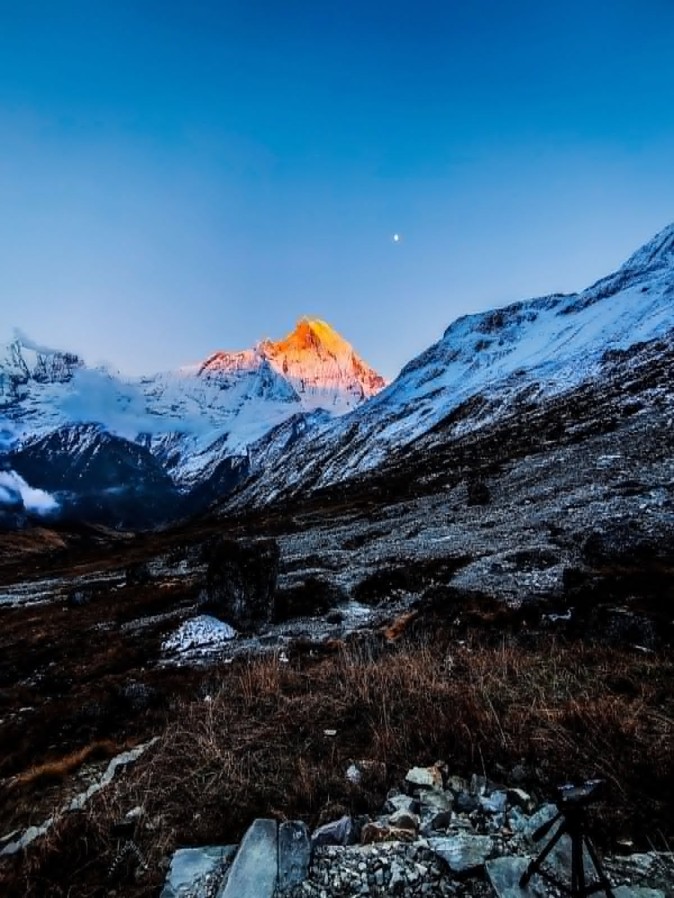
Choosing between Nepal's two most legendary trekking routes is one of the hardest decisions an international trekker will make. Everest Base Camp vs Annapurna Base Camp is the most searched trekking comparison in Nepal, and for good reason — both treks deliver world-class mountain scenery, but they differ enormously in difficulty, cost, culture, and crowd levels.
This guide breaks down the Everest Base Camp Trek and the Annapurna Base Camp Trek side by side. Whether you're a first-time trekker, a family planning a Himalayan holiday, a solo adventurer, a landscape photographer, or a seasoned hiker deciding which route to do first, this comparison will help you choose the best Nepal base camp trek for your goals, budget, and fitness level.
This article draws on years of on-the-ground trekking operations experience in both regions, current permit regulations, and firsthand knowledge of trail conditions, teahouse standards, and seasonal weather patterns.
Everest Base Camp and Annapurna Base Camp consistently rank as Nepal's two most sought-after treks. Both lead into the heart of the Himalaya, yet the on-the-ground experience of getting there is strikingly different — in altitude, duration, cost, and crowd levels.
A trekker who books the wrong trip for their fitness level or travel style often ends up either bored by an easier trail or overwhelmed by one that's too demanding. Understanding the real differences — not just the marketing photos — is the best way to make sure your Nepal trekking holiday matches your expectations, budget, and available vacation time.
"Everest Base Camp vs Annapurna Base Camp" is often framed as an either-or choice, but in reality many trekkers eventually do both, spaced a year or more apart, as part of a longer Nepal trekking journey.
| Feature | Everest Base Camp | Annapurna Base Camp |
|---|---|---|
| Duration | 12–14 days | 7–11 days |
| Max Altitude | 5,364 m (Kala Patthar 5,545 m) | 4,130 m |
| Difficulty | Moderate–Challenging | Moderate |
| Total Distance | ~130 km | ~60–75 km |
| Restricted Area Permit | No (TIMS + Sagarmatha entry) | No (ACAP entry) |
| Daily Cost (approx.) | $50–70 | $30–45 |
| Crowd Level | Very high | High |
| Teahouse Quality | Good–Excellent | Good–Excellent |
| Best Season | Mar–May, Sep–Nov | Mar–May, Sep–Nov |
| Wi-Fi/Electricity | Reliable (paid) | Reliable (paid) |
| Starting Point Access | Flight to Lukla | Drive from Pokhara |
| Ideal For | Bucket-list trekkers, solo trekkers | Beginners, families |
Featured snippet answer:
The Everest Base Camp Trek is longer, higher, and more physically demanding than the Annapurna Base Camp Trek.
The Annapurna Base Camp Trek is shorter, cheaper, and more accessible for beginners and families.
The Everest Base Camp Trek is Nepal's most famous trekking route, taking hikers through the Khumbu region to the foot of the world's highest mountain, 8,849 m Mount Everest. The trail passes through Sherpa villages, ancient monasteries, and dramatic high-altitude terrain, with Kala Patthar offering the trek's best sunrise views of Everest itself.
Check out the full itinerary of Everest Base Camp.
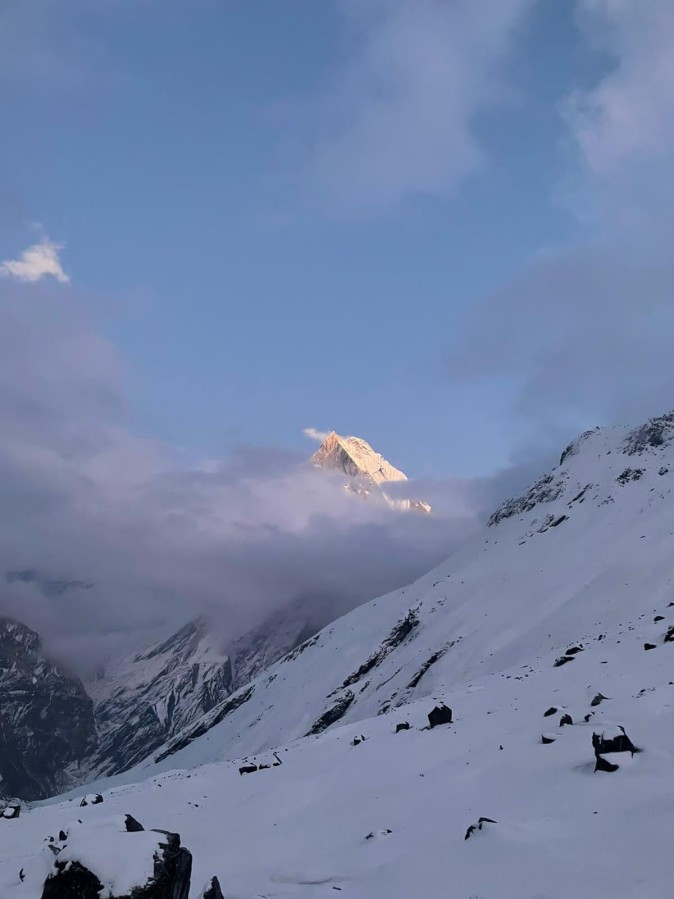
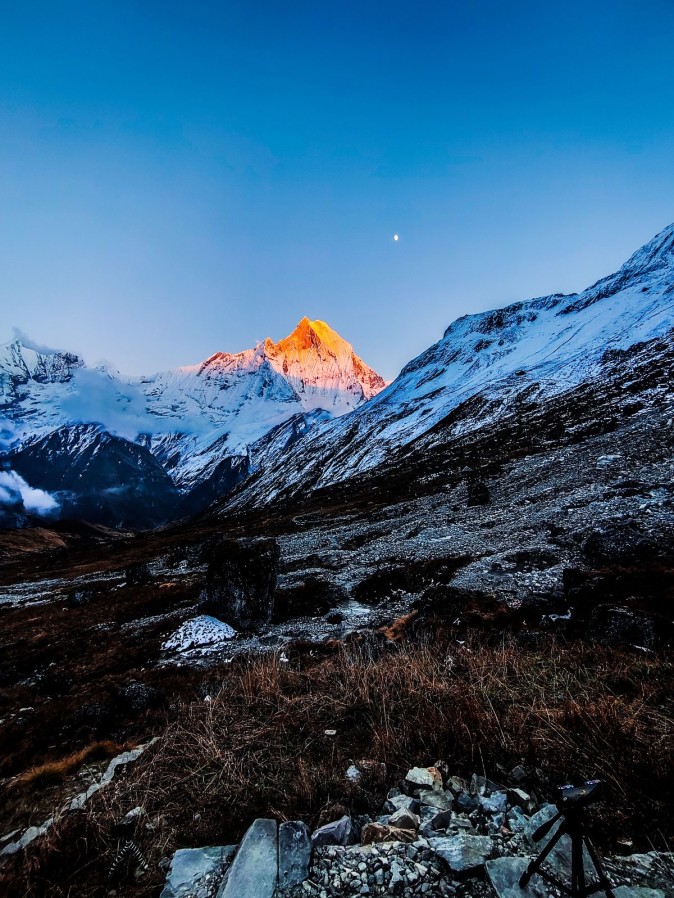
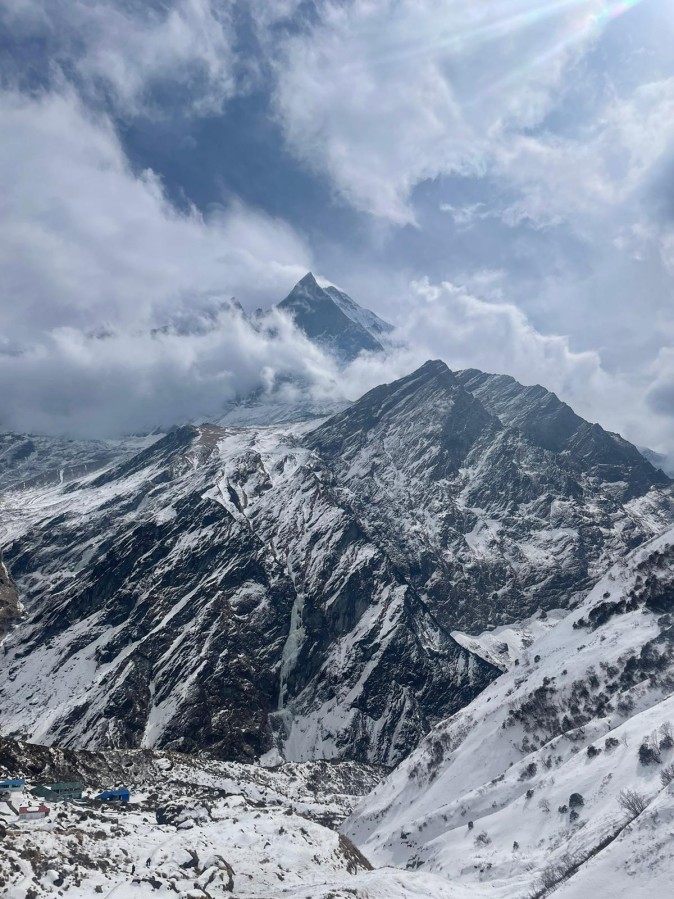
The Annapurna Base Camp Trek is a shorter, more moderate journey into the Annapurna Sanctuary, a natural amphitheater of peaks surrounding the trekker on all sides. It combines lush rhododendron forests, terraced farmland, Gurung and Magar villages, and a dramatic final approach into a bowl of 7,000–8,000 m peaks.
Check out the full itinerary of Annapurna Base Camp Trek.
For the Everest or Annapurna Trek you can contact Orbit Nepal Adventure on whatshapp for the personalized trek iitinerary
A Brief History and Why These Trails Became Famous
Everest Base Camp rose to global fame after Tenzing Norgay and Edmund Hillary's historic 1953 summit, turning the Khumbu region into a pilgrimage site for trekkers who wanted to stand where the world's greatest mountaineering story began.
The Annapurna Sanctuary, by contrast, became legendary for a different reason: its natural amphitheater shape means trekkers are surrounded by peaks on nearly every side, a geographic quirk that has made it one of the most photographed mountain views on Earth.
Understanding this history helps explain the infrastructure you'll read about below: decades of trekking tourism have built up both regions' teahouse networks, making them the two most developed trekking corridors in Nepal.
A useful way to think about difficulty is to separate "terrain difficulty" from "altitude difficulty." On terrain alone, neither trek requires technical climbing skills, ropes, or crampons — both are non-technical walking routes on maintained trails. What actually separates the two is elevation gain per day and total trip length. By that measure, EBC is meaningfully harder than ABC, even though both involve "just walking."
For less difficult trek and less crowded treks with gret views you can check out treks like Madri himal trek , Manaslu circuit trek and Kanchanjengua Trek
These numbers include Kathmandu arrival and departure buffer days, which matter more than most first-time trekkers expect. Lukla flights on the EBC route are notorious for weather delays, and experienced operators typically build one or two spare days into the itinerary for this reason.
If your vacation time is limited, ABC is by far the more flexible option: shorter variants can be completed in as little as 5–7 days for trekkers who skip the Poon Hill extension, while a full Sanctuary loop with Poon Hill takes closer to 10–11 days.
The lower maximum altitude on the Annapurna Base Camp Trek is one of the biggest reasons it's recommended for beginners and families.
Both treks offer the classic teahouse menu — dal bhat, noodles, momos, pancakes, and soups — with some of the widest menus in Nepal, including pizza, pasta, and bakery items in busier villages on both routes.
Note: Permit fees are subject to change. Always verify current rates with the Nepal Tourism Board or your trekking agency before departure. SAARC nationals receive discounted rates.
📋 Need help arranging your permits? Contact Orbit Nepal Adventure on WhatsApp — we handle all paperwork for guided treks.
All trekkers should learn to recognize early symptoms of acute mountain sickness (headache, nausea, dizziness) and prioritize gradual ascent, hydration, and rest regardless of which trek they choose. The general rule of thumb above 3,000 m is to avoid increasing sleeping altitude by more than 300–500 m per day, and to schedule a rest day for every 1,000 m of net elevation gained. This applies to both treks, though it's easiest to follow on ABC simply because the overall elevation ceiling is lower.
⚠️ Trekkers with any history of cardiovascular or respiratory conditions should consult a doctor before attempting either route, and should strongly consider carrying a pulse oximeter to monitor blood oxygen saturation throughout the trek.
A simple benchmark: if you can comfortably walk 5–6 hours with a daypack on hilly terrain, on consecutive days, without significant knee or joint pain, you have the baseline fitness for ABC. For EBC, aim to sustain that pace for 12–14 consecutive days.
Pros ✔️:
Cons ❌:
Pros ✔️:
Cons ❌:
1. Acclimatize deliberately. Build in a rest day at Namche Bazaar on EBC regardless of how strong you feel.
2. Book Lukla flights with buffer days. Weather delays are common — always add 1–2 buffer days to your itinerary.
3. Choose shoulder-season dates to avoid crowds. Early March or late November on EBC and ABC offer good weather with fewer trekkers.
4. Pack for a 20–25°C temperature swing. Even in peak season, high-altitude mornings can be well below freezing while lower valleys stay warm.
5. Carry a personal water purification method. It reduces plastic waste and cost compared to buying bottled water at every teahouse.
6. Train with a weighted daypack for 6–8 weeks before departure. Stair climbing and long day-hikes are the best preparation for either trek.
7. Travel insurance must cover high-altitude trekking and helicopter evacuation — non-negotiable for both routes.
8. Break in your boots at least a month before departure. Blisters and hot spots are among the most common trek-ending problems, and they're almost entirely preventable with properly worn-in footwear.
9. Layer your clothing rather than relying on one heavy jacket. A base layer, mid layer, and shell system adapts far better than a single insulated jacket.
10. Carry cash in Nepali rupees for the trail. ATMs are unreliable past Namche Bazaar on EBC and past Jomsom-area access points on ABC.
11. Respect local customs at monasteries and chortens. Walk clockwise around religious structures, remove shoes when entering monasteries, and ask permission before photographing local people.
Regardless of which trek you choose, a core packing list applies:
a 3-season sleeping bag rated to at least -10°C
a headlamp with spare batteries,
trekking poles
sun protection (hat, sunglasses rated for high-altitude UV, and SPF 50+ sunscreen)
a basic first-aid kit
and water purification tablets or a filter.
Q.1. Which is harder, Everest Base Camp or Annapurna Base Camp?
└─> Everest Base Camp is harder than Annapurna Base Camp. It reaches a higher maximum altitude (5,364 m vs. 4,130 m), takes longer, and carries a greater risk of altitude sickness.
Q.2. Which base camp trek is best for beginners?
└─> The Annapurna Base Camp Trek is the best base camp trek in Nepal for beginners due to its lower altitude, shorter duration, and well-developed teahouse infrastructure.
Q.3. Can I do Everest Base Camp and Annapurna Base Camp on the same trip?
└─> Yes, though it requires significant time (roughly 3–4 weeks total) and a good recovery period between treks due to the physical demands of both routes.
Q.4. Do I need a guide for Annapurna Base Camp or Everest Base Camp?
└─> A licensed guide is not legally mandatory for EBC or ABC for most nationalities, but it's strongly recommended for safety, navigation, and cultural insight, especially for first-time trekkers in Nepal.
Q.4. What is the best season to trek to Everest Base Camp and Annapurna Base Camp?
└─> Autumn (September to November) and spring (March to May) are the best seasons for both treks, due to stable weather, clear mountain visibility, and good trail conditions.
Q.4. Is Annapurna Base Camp trek safe for solo female trekkers?
└─> Yes, the Annapurna Base Camp Trek is widely considered one of the safer solo treks in Nepal due to high trekker traffic, well-marked trails, and frequent teahouses.
Q.5. How many days does it take to trek to Everest Base Camp?
└─> Most itineraries take 12–14 days round trip from Kathmandu, including flights to and from Lukla and acclimatization days at Namche Bazaar and Dingboche.
Q.6. How many days does it take to trek to Annapurna Base Camp?
└─> Most itineraries take 7–11 days round trip from Pokhara, depending on whether you include the Ghorepani Poon Hill extension.
Q.7. What is the maximum altitude reached on each trek?
└─> Everest Base Camp reaches 5,364 m (with Kala Patthar at 5,545 m), while Annapurna Base Camp reaches 4,130 m.
Q.8. Which trek is cheaper, Everest Base Camp or Annapurna Base Camp?
└─> Annapurna Base Camp is cheaper, typically costing $30–45 per day on the trail compared to $50–70 per day for Everest Base Camp, mainly due to Lukla flight costs and higher park fees on the EBC route.
There's no single "best" trek between Everest Base Camp and Annapurna Base Camp — only the best trek for your specific goals.
If you want the world's most iconic trekking bucket-list experience, choose Everest Base Camp.
If you want a shorter, beginner-friendly introduction to the Himalaya with a stunning mountain amphitheater, choose Annapurna Base Camp. For more beginner friendly trek you can check out treks like Madri himal trek , Manaslu circuit trek and Kanchanjengua Trek .
Whichever route calls to you, proper planning, gradual acclimatization, and a trustworthy local operator make all the difference between a good trek and a great one.
It's also worth remembering that these two treks aren't a mutually exclusive lifetime choice. Many trekkers start with Annapurna Base Camp or the Poon Hill loop as their first introduction to the Himalaya, then return a year or two later for Everest Base Camp once they've built confidence and altitude tolerance.
Ready to plan your Himalayan adventure? Contact Orbit Nepal Adventure for a free, no-obligation itinerary consultation tailored to your fitness level, budget, and travel dates
Website : Orbit Nepal Adventure
Whatshapp : Contact now
Contact no : +977 9841766021
Gmail : orbitnepaladv@gmail.com