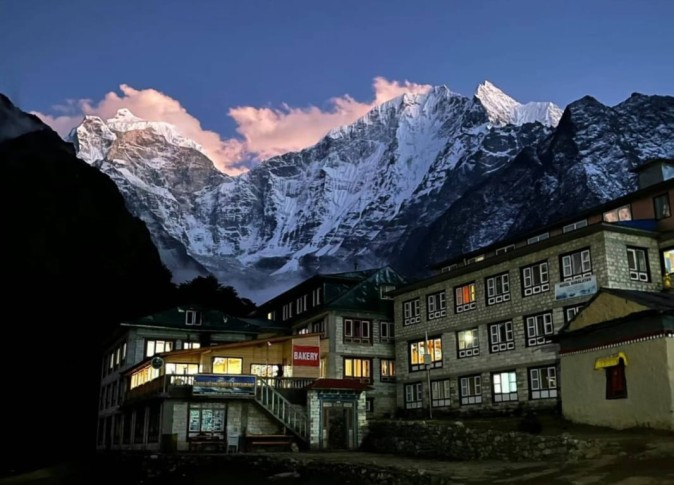
Thamel, Kathmandu, Nepal
Poon Hill Trek Itinerary 2026: Complete Day-by-Day Guide, Route, Cost & Travel Tips
If you only have one week in Nepal and want a taste of the Himalaya without committing to three weeks at altitude, the Poon Hill Trek itinerary 2026 is the route locals recommend first. It packs a 360-degree sunrise over Dhaulagiri and Annapurna, a night in a rhododendron forest, and genuine Gurung and Magar village life into as few as four days.
This guide walks you through every version of the Ghorepani Poon Hill Trek — the fast 4-day option, the balanced 5-day classic, and the fuller 6-day route that adds Khopra or Tadapani. You'll find real distances, walking hours, an altitude chart, permit costs, a full packing list, and a day-by-day breakdown written from years of running this trek out of Pokhara.
Whether you're a first-timer wondering if Nepal is "too hard," a photographer chasing that famous sunrise shot, or a family looking for a safe introduction to teahouse trekking, this Poon Hill trek guide has the specifics you need to book with confidence.
Quick tip: If you're combining this with a longer trip, the Poon Hill route is also the standard warm-up leg for the Annapurna Base Camp Trek Itinerary and the Mardi Himal Trek Itinerary — many trekkers do Poon Hill first to acclimatize before pushing higher.
Poon Hill has earned its reputation as Nepal's most accessible Himalayan viewpoint, and for good reason.
Trek Overview
The Poon Hill Trek Nepal route begins near Pokhara — either at Nayapul or, in the shorter itineraries, via a jeep transfer partway up the trail to Ulleri or Ghandruk. From there, trekkers climb through the Modi Khola valley into thick rhododendron and oak forest, reaching the Gurung village of Ghorepani at 2,860m. Before dawn the next morning, everyone hikes roughly 45 minutes to an hour up to the Poon Hill viewpoint tower for sunrise, then descends via Tadapani, Ghandruk, or back through Ulleri, depending on the itinerary chosen.
This is a teahouse trek, meaning you sleep and eat in locally run lodges the entire way — no tents, no camping gear required.
| Detail | Information |
|---|---|
| Trek Region | Annapurna Conservation Area, western Nepal |
| Trek Duration | 4–6 days (Pokhara to Pokhara) |
| Max Altitude | 3,210 m (Poon Hill viewpoint) |
| Difficulty | Easy to Moderate |
| Trek Distance | Approx. 25–45 km (varies by itinerary) |
| Starting Point | Nayapul / Ulleri (1–1.5 hrs drive from Pokhara) |
| Trek Type | Teahouse / lodge-based |
| Best Season | March–May and September–December |
| Permits Required | ACAP + TIMS |
| Group Size | Solo, couples, families, or groups — all suitable |
| Guide Required | Recommended; mandatory for solo foreign trekkers under current Nepal regulations |
The trek is essentially a loop through the southern Annapurna foothills:
Pokhara → Nayapul → Tikhedhunga/Ulleri → Ghorepani → Poon Hill (sunrise) → Tadapani or Ghandruk → Nayapul → Pokhara
Because it's a loop rather than an out-and-back, scenery changes constantly — you won't retrace the same stretch of trail twice on the 5- and 6-day versions.
| Day | Route | Altitude | Walking Time |
|---|---|---|---|
| 1 | Drive Pokhara to Ulleri, trek to Ghorepani | 2,860 m | 3–4 hrs |
| 2 | Poon Hill sunrise, trek to Tadapani | 2,630 m | 6–7 hrs |
| 3 | Tadapani to Ghandruk to Nayapul, drive to Pokhara | 1,940 m → drive | 5–6 hrs |
| 4 | Buffer/departure day (or extend with Pokhara sightseeing) | — | — |
Highlighted tip: The 4-day itinerary skips the long stone staircase from Tikhedhunga by driving directly to Ulleri, saving roughly half a day of walking without cutting the sunrise experience.
The most popular and best-balanced Poon Hill Trek itinerary, giving your body an extra day to acclimatize and enjoy the trail at a gentler pace.
| Day | Route | Altitude | Walking Time |
|---|---|---|---|
| 1 | Drive Pokhara to Nayapul, trek to Tikhedhunga/Ulleri | 1,960 m | 4–5 hrs |
| 2 | Ulleri to Ghorepani | 2,860 m | 4–5 hrs |
| 3 | Poon Hill sunrise, trek to Tadapani | 2,630 m | 6–7 hrs |
| 4 | Tadapani to Ghandruk | 1,940 m | 5 hrs |
| 5 | Ghandruk to Nayapul, drive to Pokhara | drive | 3–4 hrs |
For trekkers who want more time in the hills, better acclimatization, or an extension toward Khopra Ridge or Mardi Himal viewpoints.
| Day | Route | Altitude | Walking Time |
|---|---|---|---|
| 1 | Drive Pokhara to Nayapul, trek to Tikhedhunga | 1,540 m | 4 hrs |
| 2 | Tikhedhunga to Ghorepani | 2,860 m | 5–6 hrs |
| 3 | Poon Hill sunrise, trek to Tadapani | 2,630 m | 6–7 hrs |
| 4 | Tadapani to Ghandruk (rest afternoon in village) | 1,940 m | 5 hrs |
| 5 | Ghandruk to Landruk or Jhinu Danda (optional hot spring) | 1,780 m | 4–5 hrs |
| 6 | Jhinu Danda/Landruk to Nayapul, drive to Pokhara | drive | 3–4 hrs |
Highlighted tip: Adding Jhinu Danda on Day 5 lets you soak in natural hot springs beside the Modi Khola river — a favorite reward stop after four days of walking.
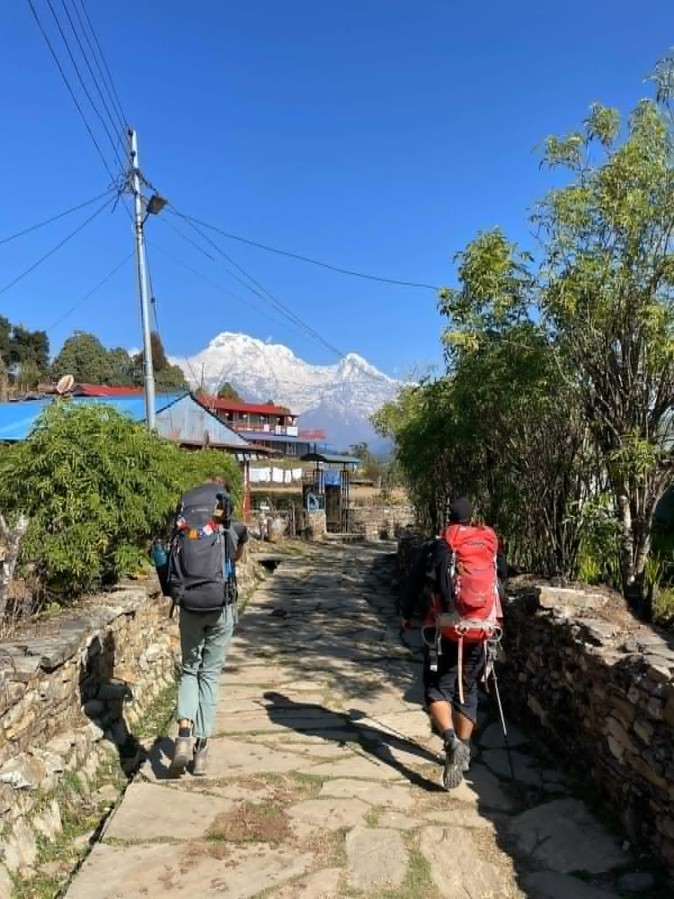
You'll leave Pokhara by private jeep or local bus, register your permits at Birethanti checkpoint, and begin walking along the Modi Khola river. The trail climbs steadily through farming villages, bamboo groves, and increasingly dense rhododendron forest as you gain elevation toward Ghorepani, a Gurung settlement with wide mountain views even before sunrise.
You'll wake around 4:30 AM and climb roughly 45–60 minutes by headlamp to the Poon Hill viewpoint tower. As the sky lightens, the entire Annapurna–Dhaulagiri massif appears in sequence — genuinely one of the most photographed sunrises in the Himalaya. After breakfast back in Ghorepani, the trail continues through dense rhododendron forest, often with troops of langur monkeys, toward Tadapani or onward toward Ghandruk depending on the itinerary.
Day 3–5/6: Descent Through Gurung Villages
The remaining days descend through Ghandruk — one of the largest and most photogenic Gurung villages in Nepal, with a small Gurung Culture Museum — before rejoining the road at Nayapul for the drive back to Pokhara. Longer itineraries add Jhinu Danda's natural hot springs or a detour toward Khopra Ridge for extended mountain views.
Highlighted tip: You can combine this trek with Annapurna Base Camp or paired with the Mardi Himal Trek for a longer Annapurna-region trip.
| Itinerary | Total Distance | Total Walking Time | Max Altitude |
|---|---|---|---|
| 4-Day | ~25–28 km | 14–17 hrs | 3,210 m |
| 5-Day | ~33–38 km | 18–22 hrs | 3,210 m |
| 6-Day | ~40–45 km | 22–27 hrs | 3,210 m |
Altitude progression (5-Day itinerary):
| Location | Elevation |
|---|---|
| Pokhara | 820 m |
| Nayapul | 1,070 m |
| Tikhedhunga/Ulleri | 1,540–1,960 m |
| Ghorepani | 2,860 m |
| Poon Hill (viewpoint) | 3,210 m |
| Tadapani | 2,630 m |
| Ghandruk | 1,940 m |
Difficulty Level
The Poon Hill Trek is rated easy to moderate, making it one of the most forgiving multi-day treks in Nepal.
| Season | Months | Conditions |
|---|---|---|
| Spring ✔️ | March–May | Rhododendrons in bloom, clear mornings, warm days |
| Autumn✔️ | September–November | Best visibility, stable weather, peak season |
| Winter ⚠️ | December–February | Cold but clear skies, quieter trails, possible light snow at Ghorepani |
| Monsoon ⚠️ | June–August | Lush green scenery but frequent rain, leeches, and clouded mountain views |
Spring (March–May) and autumn (September–November) are the two peak windows for the best time for Poon Hill trek, offering the clearest sunrise views and most comfortable trekking temperatures. Autumn generally has the sharpest mountain visibility, while spring adds the bonus of rhododendron forests in full bloom.
Accommodation throughout the trek is in tea houses — simple, family-run lodges with twin-share rooms, shared bathrooms (attached bathrooms available in some Ghorepani and Ghandruk lodges), and a common dining hall heated by a wood stove in the evening.
Tea house trek Nepal menus are surprisingly varied for such a remote setting.
Private vehicle transfers are recommended for tighter itineraries (like the 4-day version), since they save several hours of road walking that shared buses would otherwise add to your trekking days.
Two documents are needed for anyone trekking in the Annapurna region, including Poon Hill:
| Permit | Purpose | Approx. Cost (Foreign Nationals) |
|---|---|---|
| ACAP (Annapurna Conservation Area Permit) | Entry into the Annapurna Conservation Area; funds local conservation projects | NPR 3,000 (~USD 25) |
| TIMS Card (Trekkers' Information Management System) | Trekker registration for safety and emergency tracking | NPR 2,000 for individual trekkers (~USD 17) |
Both permits are checked at the Birethanti checkpoint and again at points such as Ghorepani.
Regulations around independent versus guided trekking have tightened in recent years, and as of 2026, solo foreign trekkers on Annapurna-region routes are required to trek with a licensed guide. We, Orbit Nepal Adventure can provide you with all necessities like permits, guide and full itinerary according to you.
Approximate per-person cost for the Poon Hill Trek cost, based on a small group joining a guided teahouse trek:
| Item | Approx. Cost (USD) |
|---|---|
| ACAP + TIMS Permits | $40–45 |
| Guide (per day, shared cost) | $25–30/day |
| Porter (optional, per day, shared cost) | $20–25/day |
| Teahouse accommodation | $5–10/night |
| Meals (3 meals/day) | $15–25/day |
| Ground transport (Pokhara–Nayapul return) | $20–40 |
| Total (4-Day, guide + no porter) | ~$280–330 |
| Total (5-Day, guide + porter) | ~$380–430 |
| Total (6-Day, guide + porter) | ~$450–520 |
Highlighted tip: Costs drop noticeably when booked as part of a small group rather than a private departure, since guide and transport costs are shared. Orbit Nepal Adventure offers both small group departures and private treks depending on what suits your travel style.
Clothing
Footwear
Gear
Health & Personal
Documents
The Annapurna Conservation Area is a fragile, community-managed environment, and small choices add up across the thousands of trekkers who pass through each season.
Q. Is the Poon Hill Trek suitable for beginners?
➔ Yes. It's widely considered the best introductory trek in Nepal, with short daily walking hours, low maximum altitude, and comfortable teahouse accommodation throughout.
Q. How difficult is the Poon Hill Trek?
➔ It's rated easy to moderate. The main physical challenge is the stone staircases near Ulleri and Tikhedhunga; the rest of the trail is manageable for anyone with basic day-hike fitness.
Q. How much does the Poon Hill Trek cost?
➔ Guided teahouse packages typically range from about $280 for the 4-day itinerary to $520 for the fuller 6-day version, depending on group size, guide/porter inclusion, and season.
Q. Can I trek without a guide?
➔ Independent trekking is technically possible on the Poon Hill route itself, but current Annapurna-region regulations require solo foreign trekkers to hire a licensed guide, and a guide adds real value for navigation, permit handling, and safety.
Q. What permits are required for the Poon Hill Trek?
➔You need the ACAP (Annapurna Conservation Area Permit) and a TIMS card, both checked at trailhead checkpoints along the route.
Q. What is the best season for the Poon Hill Trek?
➔ Spring (March–May) for rhododendron blooms and autumn (September–November) for the clearest mountain visibility are the two best windows.
Q. How cold does it get on the trek?
➔ Nighttime temperatures at Ghorepani can drop close to freezing in autumn and winter, while daytime temperatures on lower sections remain mild, often 15–20°C.
Q. Is altitude sickness a concern on this trek?
➔ Less than on higher routes, since the trek stays under 3,300m, but mild symptoms like headache or fatigue are still possible; walking at a steady pace and staying hydrated is the best prevention.
Q. How many days do I need for the Poon Hill Trek?
➔ Most trekkers choose between 4 and 6 days; 5 days is the most popular balance of pace and full trail experience.
Q. Can families with children do this trek?
➔Yes, Poon Hill is one of the most family-friendly multi-day treks in Nepal, suitable for children roughly 8 years and older with reasonable fitness.
Q. Do I need previous trekking experience?
➔ No prior trekking experience is necessary, regular walking or hiking fitness is enough preparation.
Q. Is Wi-Fi available along the trail?
➔ Yes ,Most teahouses offer Wi-Fi, usually for a small fee, though connection quality varies and can be unreliable at higher stops.
Q. What's the difference between the 4-day and 6-day itineraries?
➔The 4-day version uses vehicle transfers to skip lower sections of trail, while the 6-day version adds extra villages such as Jhinu Danda or Khopra for a slower pace and more cultural immersion.
Q. Can I combine Poon Hill with another trek?
➔ Yes , it's commonly combined as an acclimatization leg before the Annapurna Base Camp Trek Itinerary or paired with the Mardi Himal Trek Itinerary for a longer Annapurna-region trip.
Q. When should I book my Poon Hill Trek?
➔ Booking 4–8 weeks ahead is recommended for peak season (March–May, October–November) to secure good teahouse rooms and preferred guide availability.
The Poon Hill Trek itinerary 2026 remains one of the best ways to experience the Himalaya on a limited timeline — a genuine 360-degree sunrise over 6,000m and 8,000m peaks, real village life, and comfortable teahouse trekking, all achievable in less than a week. Whether you choose the fast 4-day version, the well-balanced 5-day classic, or the fuller 6-day route through Jhinu Danda's hot springs, the trail rewards trekkers of nearly every fitness level and travel style.
If this is your first trip to Nepal for trek, Poon Hill is also a smart way to test your legs before committing to bigger routes like the Annapurna Circuit Trek Itinerary, Langtang Valley Trek Itinerary, or Everest Base Camp Trek Itinerary on a future visit.
Ready for your Poon Hill Trek? Contact Orbit Nepal Adventure today for customized itineraries for easier and adventurous trek.
📲 Contact us directly on WhatsApp: Chat with us on WhatsApp
🌐 Visit: orbitnepaladv.com
📧 Email: orbitnepaladv@gmail.com
💬 Whatshapp: 9779841766021