Thamel, Kathmandu, Nepal
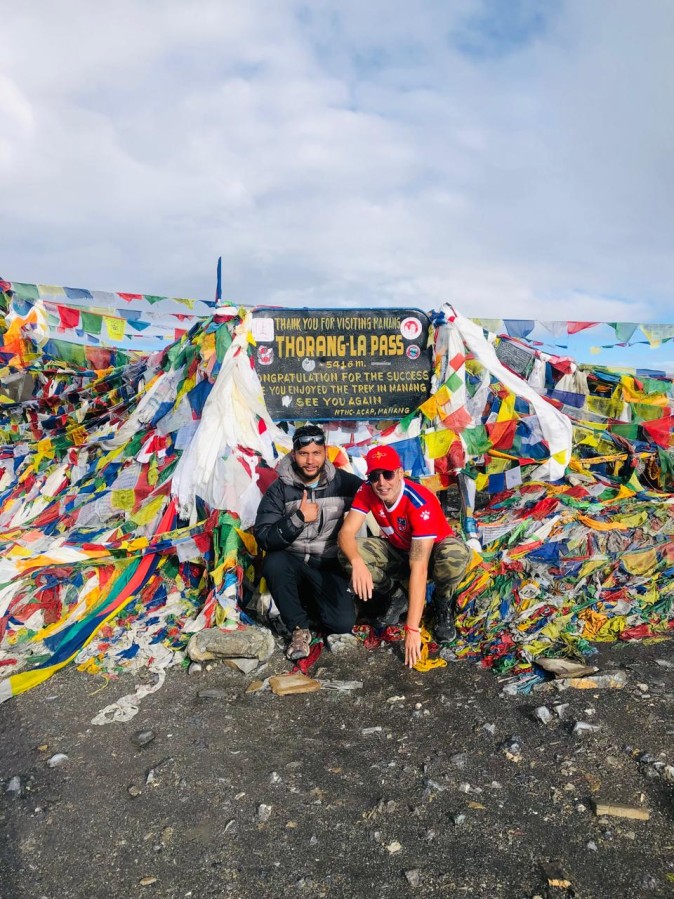
The first time I stood at Annapurna Base Camp, surrounded by a wall of ice and rock that felt close enough to touch, I remember thinking: nobody told me it would feel like this. Not the views — those I expected. I mean the small, practical things. The blister I could have avoided. The extra layer I didn't pack. The pace I should have slowed down on Day 2 instead of Day 4.
If you're researching things to know before the Annapurna Base Camp trek, this is the guide I wish someone had handed me before I left Kathmandu. It's not a route description or a packing checklist — it's the practical, sometimes unglamorous stuff that makes the difference between a trek you endure and one you actually enjoy.
| Lesson | Why It Matters |
|---|---|
| ABC is more physically demanding than the "moderate" rating suggests | It's the stairs, not the altitude, that wear you down first. |
| Altitude sickness doesn't care how fit you are | Pace and hydration matter more than gym strength. |
| Going slower almost always gets you there in better shape | Rushing early costs you energy you need for the harder days ahead. |
| Mountain weather changes fast | Pack for four seasons in one day. |
| Nights at ABC are colder than expected | Daytime warmth on the trail doesn't reflect after-dark temperatures. |
| Overpacking is a common first-timer mistake | Teahouses provide meals and blankets — you don't need to carry everything. |
| Broken-in shoes matter more than expensive gear | Grip and comfort on stone steps beat brand-new, pricier boots. |
| Your legs will likely hurt more going down than going up | Descending stone steps stresses knees more than climbing does. |
| Carry enough cash | Card machines and ATMs are not reliable once you're on the trail. |
| The trail isn't always photogenic | Mud, crowds, and stone steps are part of the real experience. |
On paper, the Annapurna Base Camp trek is often labeled "moderate" and compared to high-altitude treks like the Annapurna Circuit or Everest Base Camp, it is. But nobody mentions the stairs. Thousands of stone steps, up and down, sometimes within the same hour. It's not one long climb - it's a rhythm of ascending into a village, descending into a river valley, then climbing straight back out the other side.
By Day 2 or 3, most first-timers realize this isn't a casual walk. Long trekking days, uneven trail surfaces, and repeated elevation changes add up. If you've done some hiking before but assumed ABC would be "easy" because it doesn't go above 4,130 meters, that assumption is the first thing to let go of.
This one surprises people. Annapurna Base Camp Trek altitude tops out around 4,130 meters, which is high enough that altitude sickness is a real possibility — and fitness level has very little to do with who gets it. I've seen strong, experienced hikers turn back with headaches and nausea, while less athletic trekkers walked past them just fine.The usual early symptoms are headache, mild nausea, fatigue beyond what the day's walking explains, and disturbed sleep. Mild symptoms are common and often improve with rest, water, and a slower pace.Whether altitude medication is right for you is a personal decision to make with a doctor before you travel, not something to decide on the trail. Don't assume everyone needs it, and don't assume you're exempt because you're fit.
Note: If the symptoms worsen instead of easing immediately descend and seek help, not push through.
A comfortable, unhurried pace with regular short breaks , a few minutes every 45 minutes to an hour — keeps your legs fresher and your head clearer. It also means you actually notice the trail: the rhododendron forests, the sound of the river below, the villages you're walking through, rather than just the ground in front of your boots.
Clear morning skies at Chhomrong can turn into cloud, drizzle, or even snow by afternoon, depending on the season. Mountain weather in the Annapurna region is genuinely unpredictable, and it can shift within a single day, let alone across a multi-day trek.
Layering is the answer, not a single heavy jacket. A breathable base layer, an insulating mid-layer, and a waterproof, windproof outer shell will handle far more situations than one bulky coat. A rain cover for your bag and a decent poncho or waterproof jacket are worth the extra weight, even outside monsoon season.
Daytime walking often warms you up enough that you forget how cold teahouse nights near Annapurna Base Camp and Machhapuchhre Base Camp actually get. Once the sun drops behind the ridgelines, temperatures fall fast, and teahouse rooms are not insulated or heated the way a hotel room is.
A sleeping bag rated for below-freezing temperatures, warm gloves, a hat, and thick socks aren't optional extras — they're what let you actually sleep instead of shivering through the night.
Note: Even trekkers visiting in the warmer shoulder seasons are often caught off guard by how cold it gets above 3,000 meters after dark.
One of the most common mistakes first-time trekkers make is packing for every possible scenario and ending up with a bag that makes every step harder. You're not going camping in the wilderness - you're walking between teahouses that offer meals, blankets, and basic supplies each night.
Focus on true essentials: layered clothing, a good sleeping bag, basic first aid, a headlamp, water purification, and personal items. Skip the duplicate outfits, the extra pairs of jeans, and gear "just in case."
Note: For a full essentials-only breakdown, Orbit Nepal Adventure's Annapurna Base Camp Trek Packing List is worth reading before you pack your bag, not after.
You can trek in budget clothing and still be fine. You cannot trek comfortably in the wrong shoes. Grip on wet stone steps, ankle support on uneven trail, and simply being broken in before Day 1 matter far more than how much your gear costs overall.
Insider Tip: Never start a multi-day trek in brand-new boots. Wear them on local hikes for at least a few weeks beforehand so your feet and the shoes have already worked out their disagreements before you're two days from the nearest road.
Almost every first-timer expects the climb up to be the hard part. In reality, many trekkers find the descent tougher on their knees and legs. Constant downhill walking on stone steps puts repeated impact stress on your knees in a way that climbing simply doesn't.
What and when you eat and drink on the trail directly affects how you feel the next day. Regular meals, consistent hydration, and carrying snacks for between-meal energy dips all matter more on a multi-day trek than they would at home.
Also worth knowing: menu options tend to narrow and prices tend to rise as you climb higher, since everything has to be carried in on foot or by mule.
Insider Tip: Dal bhat — Nepal's staple rice, lentil, and vegetable meal remains a reliable, energy-dense choice at almost every teahouse along the route.
Teahouses along the ABC route generally offer hot showers, phone charging, and sometimes Wi-Fi . Many of these come with a small additional fee, and availability can depend on the season, the specific teahouse, and how much sun or generator power they've had that day.
It's realistic, not pessimistic, to expect that charging might mean sharing one outlet with a dozen other trekkers, and that hot water might run out before you do.
Note: Bringing a power bank and treating connectivity as a bonus rather than a given will save you frustration.
There are no ATMs once you're on the ABC trail, and most teahouses, tea stops, and porters expect cash for meals, rooms, charging, showers, and snacks. Carry enough Nepalese rupees before you leave the last town with banking access — don't assume you'll be able to rely on cards anywhere on the trek itself.
Insider Tip: It's worth budgeting slightly more cash than you think you'll need, since prices rise with altitude and unexpected costs (an extra night, a warm drink after a cold day) tend to come up.
The photos that draw people to ABC are real — but they're not the whole picture. Expect mud during and after rain, other trekkers sharing the same narrow stone steps during peak season, occasional trail construction or maintenance work, and stretches that are simply functional rather than scenic.
That said, the trail earns its reputation for a reason. Dense rhododendron and bamboo forests, suspension bridges over glacial rivers, waterfalls, and villages like Chhomrong and Sinuwa built into the hillside all make the walk itself worthwhile, not just the destination.
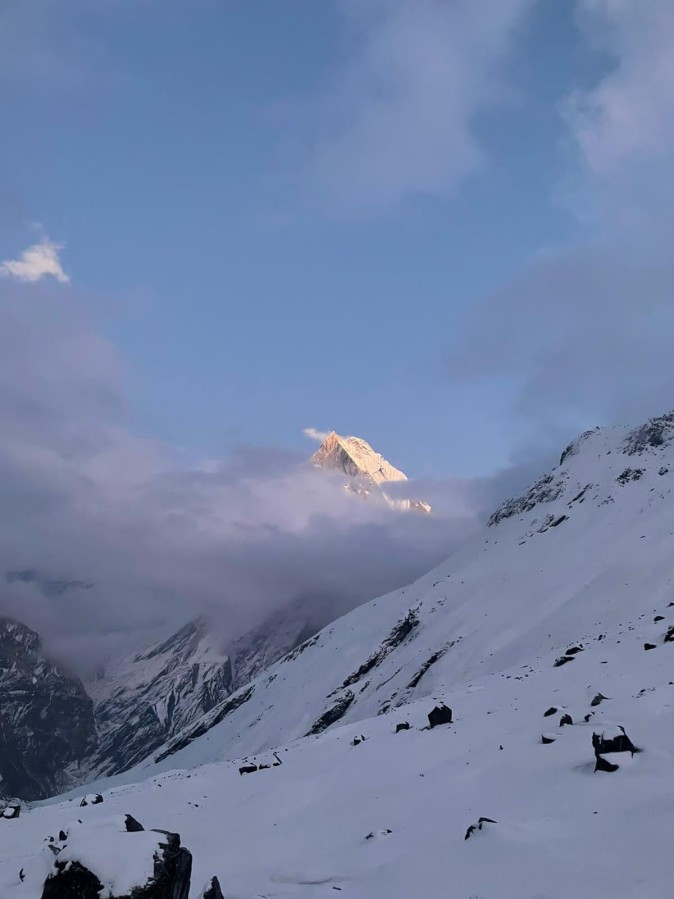
Reaching Annapurna Base Camp does not guarantee a clear view of Annapurna I or Machhapuchhre. Clouds roll in fast, and some trekkers arrive to a socked-in basin instead of the postcard panorama. It happens, and it's not something a good itinerary can fully control.
The best approach is to hold that expectation loosely and appreciate the days that do deliver clear views, rather than treating the final morning at base camp as the only moment that counts.
Note: For a proper weather and best time , Orbit Nepal Adventure's Best Time to Trek Annapurna Base Camp Trek is worth reading.
It's easy to treat ABC as a single destination, but the days leading up to it are where a lot of the trek's character lives. Villages like Ghandruk and Chhomrong, the Gurung and Magar communities along the route, hot springs at Jhinu Danda, forest trails thick with moss and rhododendron, and rivers you cross on swinging bridges all add up to more than the two hours you'll spend at base camp itself.
A rushed itinerary is one of the most common reasons trekkers struggle with fatigue or altitude symptoms. A well-paced plan builds in enough walking days, rest, and flexibility for weather delays, rather than cramming the route into the fewest days possible.
Note: If you're mapping out your days, Orbit Nepal Adventure's Annapurna Base Camp Trek Itinerary lays out a realistic day-by-day structure that accounts for altitude adjustment and rest, rather than just distance.
Spring (March–May) brings blooming rhododendrons and generally stable weather. Autumn (September–November) is widely considered the clearest and most popular season for mountain views. Winter brings cold temperatures and possible snow at higher elevations, while monsoon (June–August) means rain, leeches on lower sections, and clouded views, though far fewer crowds.
Insider Tip: Each season changes what you should pack and what to expect on the trail. Orbit Nepal Adventure's Best Time to Trek Annapurna Base Camp breaks down these seasonal differences in more depth if you're still deciding when to go.
The ABC trek requires specific permits — including the Annapurna Conservation Area Permit (ACAP) and a TIMS (Trekkers' Information Management System) card — arranged before you start walking. Trekking without the correct permits in order can cause delays or complications at checkpoints along the route.
Note: For the current requirements and how to arrange them, Orbit Nepal Adventure's Annapurna Base Camp Trek Permits guide covers what you'll need and where to get it sorted.
Your total trek cost isn't just the price of a guide or permit — it includes teahouse accommodation, meals (which get pricier at altitude), transportation to and from the trailhead, permits, porter or guide fees if you hire them, hot showers, charging, snacks, and incidentals along the way.
Note: Budgeting realistically before you go avoids the stress of running short on cash mid-trek. Orbit Nepal Adventure's Annapurna Base Camp Trek Cost guide breaks down what these expenses typically look like across the whole trip.
High-altitude trekking insurance that specifically covers emergency evacuation is one of those things you hope you'll never need — right up until you do. Helicopter evacuation from the Annapurna region is genuinely expensive, and standard travel insurance policies don't always cover trekking at altitude or emergency rescue.
Insider Tip: Check the specific altitude coverage and evacuation terms of any policy before you buy it, since this varies significantly between providers. This is worth sorting out before you leave home, not something to think about once you're already on the trail.
Nobody talks enough about the mental side of a multi-day trek. Early alarms, tired legs, days when the weather doesn't cooperate, and moments where you genuinely question why you signed up for this — they're all a normal part of the experience, not a sign that something's wrong.
What gets most trekkers through those moments isn't stubbornness, it's remembering why they came: the villages, the quiet forest trails, the first glimpse of the Annapurna massif rising above the basin. Expect the hard moments, and let yourself enjoy the good ones without waiting for the "perfect" one at the very end.
➤ It's achievable for beginners with reasonable fitness and some preparation, but it shouldn't be underestimated. Long walking days, stone stairs, and altitude all add real difficulty, even though the trek doesn't require technical climbing skills.
➤ You don't need elite fitness, but a base level of cardiovascular endurance and comfort walking multiple hours a day on uneven terrain makes a significant difference. A few weeks of hiking, stair training, or cardio beforehand is a good baseline.
➤ Beyond fitness, the biggest things to know are: altitude sickness can affect anyone regardless of fitness, weather changes quickly, nights are colder than expected, cash is essential since there are no ATMs on the trail, and a slower pace generally leads to a better experience.
➤ Focus on layered clothing, a warm sleeping bag, broken-in trekking shoes, rain protection, a headlamp, and basic first aid without overpacking. See Orbit Nepal Adventure's Annapurna Base Camp Trek Packing List for a full breakdown.
➤ Autumn (September–November) and spring (March–May) are generally considered the best seasons, offering more stable weather and clearer mountain views. Each season has trade-offs worth understanding before you book your dates.
➤ Nighttime temperatures at ABC can drop well below freezing, even outside of winter, especially once the sun sets behind the surrounding peaks. A sleeping bag rated for sub-zero temperatures and warm layers are essential regardless of season.
➤ Costs vary depending on whether you trek independently or with a guide/porter, your accommodation and meal choices, and permit fees. For a detailed breakdown, see Orbit Nepal Adventure's Annapurna Base Camp Trek Cost guide.
None of these lessons are meant to talk you out of the Annapurna Base Camp trek — if anything, they should make it easier. Most of what makes ABC hard for first-timers isn't the trek itself, it's not knowing what to expect. Once you do, the trek becomes less about surviving each day and more about actually experiencing it.
Ready to walk into the heart of the Annapurna Sanctuary?Contact Orbit Nepal Adventure today for customized itineraries for easier and adventurous trek.
📲 Contact us directly on WhatsApp: Chat with us on WhatsApp
🌐 Visit: orbitnepaladv.com
📧 Email: orbitnepaladv@gmail.com
💬 Whatshapp: 977-9841766021
Our Package : Annapurna Base Camp
.jpg "Is Everest Base Camp trekking safe?")