Thamel, Kathmandu, Nepal
Planning your ABC Trek and wondering which season to choose? This complete guide breaks down the weather, trail conditions, crowds, and highlights for every month so you can pick the perfect window for your Annapurna Base Camp Trek 2026.
| Trek Features | Details |
| Best Months | Oct & April |
| Max Altitude | 4,130m |
| Trek Duration | 16 Days |
| Starting From | USD $560 |
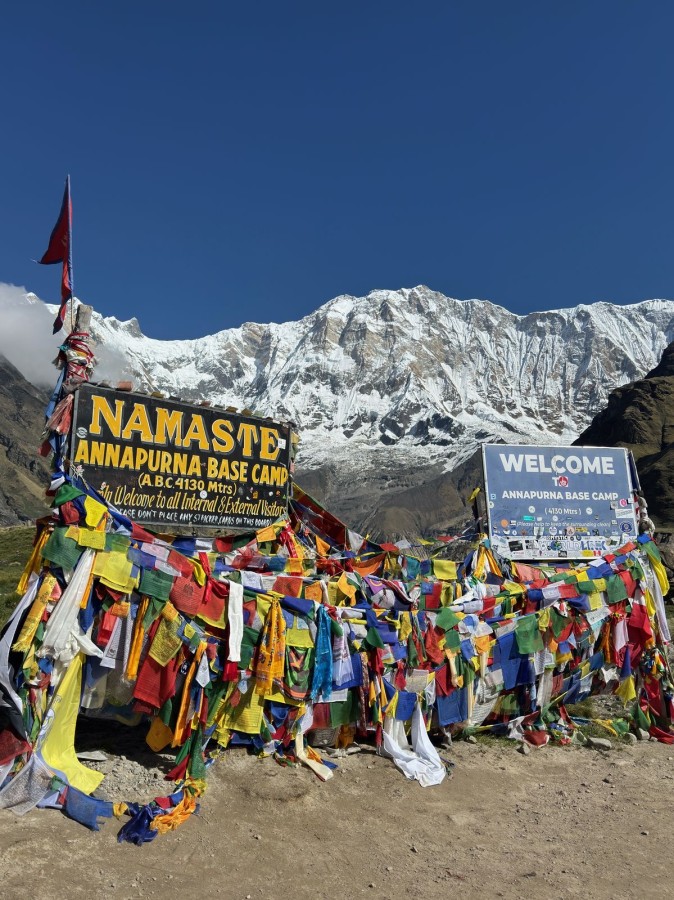
The Annapurna Base Camp Trek is one of the world's most celebrated Himalayan journeys — a 16-day route into the Annapurna Sanctuary, a breathtaking glacial amphitheatre surrounded by ten peaks above 6,000m, culminating at Annapurna Base Camp (4,130m). But the season you choose can transform the experience entirely.
Quick Answer : The best time for the Annapurna Base Camp Trek is October–November (Autumn) for the clearest skies, and March–April (Spring) for rhododendron blooms and fewer crowds. Both seasons offer excellent conditions for a 16-day ABC Trek from Kathmandu.
Spring is arguably the most beautiful season on the Annapurna Base Camp Trek. As temperatures climb and snow melts on the higher ridges, Nepal's national flower ; the rhododendron erupts across the hillsides in spectacular shades of crimson, pink, and white. The forests between Ghorepani and Chhomrong are particularly stunning, and the trail to Poon Hill (3,210m) at this time of year is one of the most photographed walks in all of Asia.
March is the very start of the trekking season. Lower altitudes are lush and warm (15–20°C in Pokhara), while the higher sections around Machapuchare Base Camp (3,712m) and the Annapurna Sanctuary may still hold lingering snow from winter. Trails are relatively quiet . You'll find a good mix of decent weather and uncrowded teahouses.
An ideal month for those who dislike crowds.
April is the single best month in spring and many experienced guides argue it's the best month of the entire year for the ABC Trek. Rhododendrons are in full bloom, temperatures are comfortable at all altitudes, the trails are active but not overwhelmed, and the mountain views are reliably clear in the mornings before afternoon clouds build.
The sunrise from Poon Hill in April with Dhaulagiri and Annapurna South above a sea of pink rhododendron is unforgettable.
May is still a good month for the Annapurna Base Camp Trek, particularly in the first two weeks. As the month progresses, pre-monsoon clouds begin to build and afternoon haze becomes more frequent. Temperatures rise significantly at lower altitudes (Pokhara can reach 30°C). Late May trekking is still perfectly doable but expect less reliable mountain views and more humidity on the lower sections of the trail.
🌸 Spring Insider Tip: If you have extra days, consider extending your ABC Trek with a side trip to Ghorepani Poon Hill — the rhododendron forest on the ridge between Tadapani and Ghorepani is at its absolute peak in April and one of Nepal's great natural spectacles.
Autumn is the most popular season for the Annapurna Base Camp Trek. The monsoon rains have washed the atmosphere clean, leaving the Himalayan sky a deep, infinite blue that makes mountain photography extraordinary. The trail is at its most vibrant green after the summer rains and the air is crisp and clear.
The tail end of the monsoon continues into early September, meaning some rain is still possible , particularly in the afternoons. However, by mid-September the weather stabilises rapidly. The landscape is incredibly lush and green, waterfalls are dramatic and full, and the post-monsoon freshness makes the colours feel extraordinarily vivid.
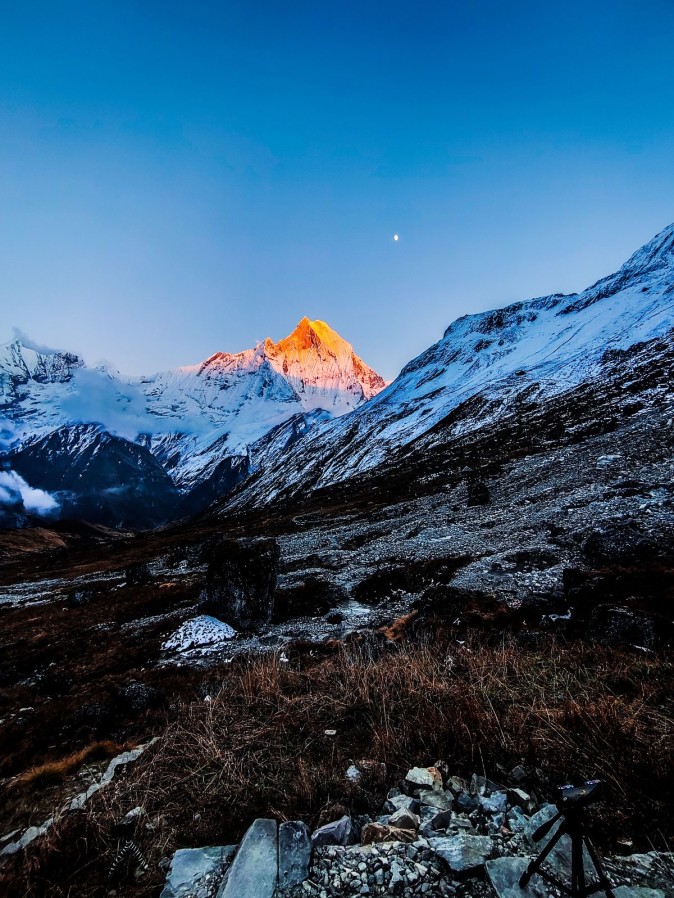
October is the undisputed peak month for trekking in Nepal, and the Annapurna Base Camp Trek in October is as good as Himalayan trekking gets. Weather is almost guaranteed to be stable and clear, temperatures are comfortable for trekking (10–20°C during the day at mid-altitudes), and the mountain panoramas from Annapurna Base Camp, Poon Hill, and the high ridges are at their absolute sharpest.
Book your departures for October well in advance teahouses fill up fast.
November is a quieter, colder alternative to October. Crowds thin out noticeably as the month progresses, while mountain views remain excellent. Temperatures drop significantly by night at higher altitudes expect below freezing at Annapurna Base Camp (4,130m) but days are still pleasant and clear.
Late November is an excellent choice for trekkers who want good weather with fewer fellow hikers on the trail.
⚠️ October Booking Warning: October departures for the Annapurna Base Camp Trek sell out months in advance. If you're planning an October trek, book your 2026 spot now — popular teahouses along the Annapurna Sanctuary trail are fully reserved as early as July for October dates.
Winter on the Annapurna Base Camp Trek is a very different experience — one that suits experienced, well-equipped trekkers who prefer solitude and don't mind the cold. The trail becomes significantly quieter after December, and many higher-altitude teahouses close between January and February, particularly around the Annapurna Sanctuary itself.
December is still manageable, with clear days and reasonable temperatures at lower altitudes. January and February are the coldest months — expect temperatures below -10°C at Annapurna Base Camp (4,130m) and snow covering the upper sections of the trail. The sanctuary can be completely snow-covered, and the route over the Modi Khola valley ridge can become icy and technically demanding without proper equipment.
Thw rewards of a winter ABC Trek are real: near-total solitude on one of Nepal's busiest trails, brilliant blue-sky days between cold spells, and the Annapurna massif draped in a full winter coat of snow that makes the mountain photography genuinely different from any other season.
🧊 Winter Essentials
If trekking in winter, ensure you carry a -15°C sleeping bag, crampons or micro-spikes, and extra insulation layers. Always check teahouse availability in the Annapurna Sanctuary with your operator before departing.
The monsoon season (June–August) is generally not recommended for the Annapurna Base Camp Trek. The region receives some of Nepal's heaviest rainfall during this period, with daily downpours making the trails slippery, the leeches unbearable in the lower forest sections, and the mountain views almost completely obscured by cloud and mist for days at a time.
Landslides are a serious safety concern on the steeper sections of the ABC Trail, particularly around Chhomrong and the Modi Khola gorge. Roads to Nayapul can also become impassable after heavy rain, making the logistics of the trek unreliable.
There is one upside: if budget is your absolute priority and you're an experienced trekker who doesn't mind wet weather and can handle uncertainty, June and early August can be trekked with a good quality rain jacket and an acceptance of limited views. Prices drop significantly and you'll have the trail almost completely to yourself.
| Month | Season | Weather | Views | Crowds | Verdict |
|---|---|---|---|---|---|
| January | Winter | Cold, clear | Good | Low | For hardy trekkers |
| February | Winter | Cold, improving | Good | Low | For hardy trekkers |
| March | Spring | Mild, warming | Very Good | Medium | ✅ Recommended |
| April | Spring | Warm, stable | Excellent | High | ⭐ Best Spring Month |
| May | Late Spring | Warm, some haze | Good AM only | Medium | ✅ Early May only |
| June | Monsoon | Heavy rain | Poor | Very Low | ❌ Not recommended |
| July | Monsoon | Heavy rain | Very Poor | Very Low | ❌ Not recommended |
| August | Monsoon | Heavy rain | Very Poor | Very Low | ❌ Not recommended |
| September | Early Autumn | Clearing rain | Variable | Medium | ✅ Late Sept good |
| October | Autumn | Stable, clear | Excellent | Very High | ⭐ Best Autumn Month |
| November | Late Autumn | Clear, cool | Excellent | Medium | ✅ Recommended |
| December | Winter | Cold, clear | Good | Low | Early Dec OK |
This is the question we get asked most often by trekkers planning their Annapurna Base Camp Trek. Here's an honest, side-by-side comparison:
| Factor | 🌸 Spring (Mar–May) | 🍂 Autumn (Sep–Nov) |
|---|---|---|
| Mountain Views | Very Good (some haze in May) | ⭐ Best — crystal clear |
| Scenery | ⭐ Best — rhododendron in bloom | Lush post-monsoon green |
| Temperatures | Warmer — ideal comfort | Cooler, colder at altitude |
| Rainfall Risk | Low (May has some) | Lowest — driest season |
| Crowds | Slightly fewer in March | Very high in October |
| Wildlife & Birds | Best — spring migration | Good |
| Photography | Best for colour & flowers | Best for mountain clarity |
| Booking Urgency | Moderate | ⚠️ Book very early for Oct |
Our verdict: Choose April for spring if you love lush colour, flowers, and slightly warmer conditions.
Choose October for autumn if you want the sharpest mountain views and the most reliable weather of the year.
Both are exceptional — you cannot go wrong with either.
Pack for variable temperatures — warm mornings at low altitude can shift to cold evenings at high altitude quickly. Bring a quality rain jacket (May especially), strong sunscreen (UV is intense at altitude), and a mid-layer fleece. Trekking poles are highly recommended for the steep descent from Ghorepani and the boulder sections near Annapurna Base Camp.
Bring warmer layers for November — a proper down jacket is essential for the Annapurna Sanctuary and overnight stays. Days are clear and beautiful but nights at high altitude drop well below freezing. Book teahouses in the Sanctuary (Machapuchare Base Camp and Annapurna Base Camp) in advance for October. Carry water purification tablets — sources can vary.
At 4,130m, Annapurna Base Camp sits at a significant altitude for many first-time trekkers. Our 16-day ABC itinerary is specifically designed with gradual daily elevation gains to minimise altitude sickness risk. If you experience symptoms of Acute Mountain Sickness (AMS) — severe headache, vomiting, loss of coordination — descend immediately and alert your guide.
Every trekker on the ABC Trail requires two permits: the Annapurna Conservation Area Permit (ACAP) and the TIMS Card (Trekkers' Information Management System). These are obtainable in Pokhara or through your trekking operator. Orbit Nepal Adventure arranges all permits on your behalf — no extra cost or hassle.
If your schedule allows extra days, the Annapurna region has several excellent shorter treks that pair beautifully with an ABC circuit. The Mardi Himal Trek offers a quieter, off-the-beaten-track alternative with outstanding views of Machhapuchhre and Annapurna South. Equally, the Jomsom Muktinath Trek into the dramatic trans-Himalayan desert landscape north of the Annapurna range is just a few days' drive from Pokhara.
Q: What is the best time for the Annapurna Base Camp Trek?
➔ The best time for the Annapurna Base Camp Trek is October–November (Autumn) for the clearest mountain views, and March–April (Spring) for rhododendron blooms and comfortable temperatures.
Q: What is the weather like at Annapurna Base Camp in October?
➔ In October, Annapurna Base Camp (4,130m) experiences daytime temperatures of around 5–10°C with nights dropping to -5°C or below. Lower sections of the trail (Pokhara, Nayapul, Tikhedhunga) are pleasantly warm (20–25°C). Skies are almost always clear and deep blue throughout the day — October is peak season for mountain photography.
Q: Can you do the ABC Trek in winter (December–February)?
➔ Yes, but it is recommended only for experienced, well-equipped trekkers. The upper sections of the trail near the Annapurna Sanctuary can be snow-covered and icy, and some teahouses close. Temperatures at ABC drop below -10°C at night. In return, you'll have near-total solitude on one of Nepal's most popular trails.
Q: Is the Annapurna Base Camp Trek possible during monsoon?
➔ Trekking during monsoon (June–August) is not recommended. Heavy rain, leeches, slippery trails, landslide risk, and very poor mountain visibility make for an uncomfortable and potentially unsafe experience. If you must trek during this period, late August when the monsoon begins to weaken is the least bad option.
Q: When are rhododendrons in bloom on the Annapurna Base Camp Trek?
➔ Rhododendrons bloom on the Annapurna Base Camp Trail primarily from mid-March through late April. The most spectacular displays are found in the Ghorepani–Poon Hill area and in the forest between Tadapani and Chhomrong. April is the absolute peak for rhododendron colour.
Q: How far in advance should I book the Annapurna Base Camp Trek?
➔ For October departures, we strongly recommend booking at least 3–4 months in advance — popular teahouses in the Annapurna Sanctuary fill up by July for October dates.
For spring (March–April) departures, 2–3 months in advance is generally sufficient.
For off-peak seasons (winter, May, September) you can book with shorter notice.
Orbit Nepal Adventure is a government-registered, Kathmandu-based trekking company with over 15 years of expertise in Nepal's Himalayan treks. Our Annapurna Base Camp Trek 2026/2027 package is a fully inclusive 16-day journey starting from USD $560 per person — covering all meals during the trek, teahouse accommodation, English-speaking licensed guide, porter, permits, and airport transfers.
Ready for your Annapurna Base CampTrek? Contact Orbit Nepal Adventure today for customized itineraries for easier and adventurous trek.
📲 Contact us directly on WhatsApp: Chat with us on WhatsApp
🌐 Visit: orbitnepaladv.com
📧 Email: orbitnepaladv@gmail.com
💬 Whatshapp: 9779841766021