Thamel, Kathmandu, Nepal
Mardi Himal Trek Itinerary: A Complete Day-by-Day Guide
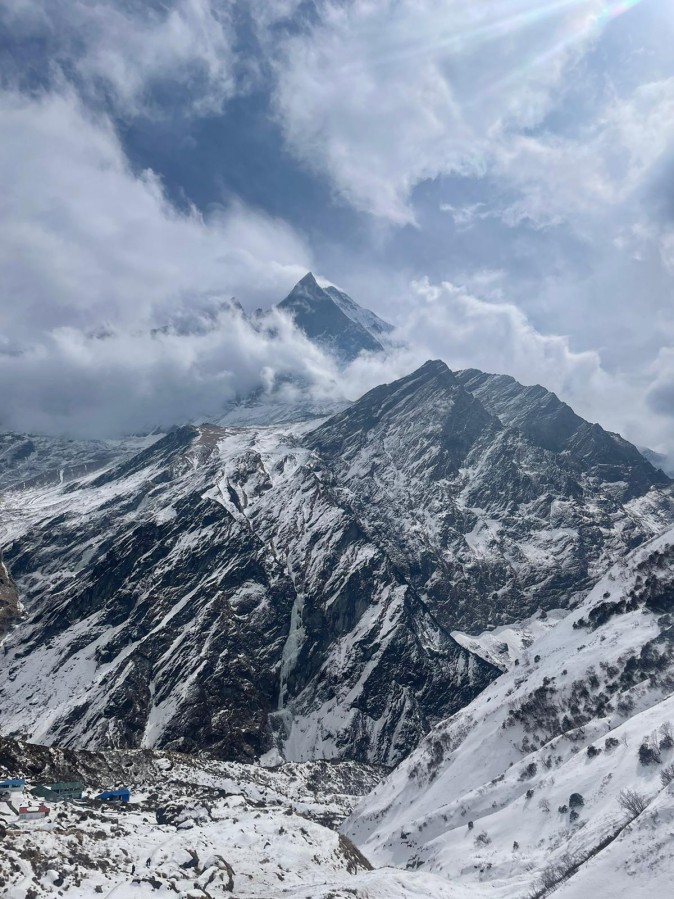
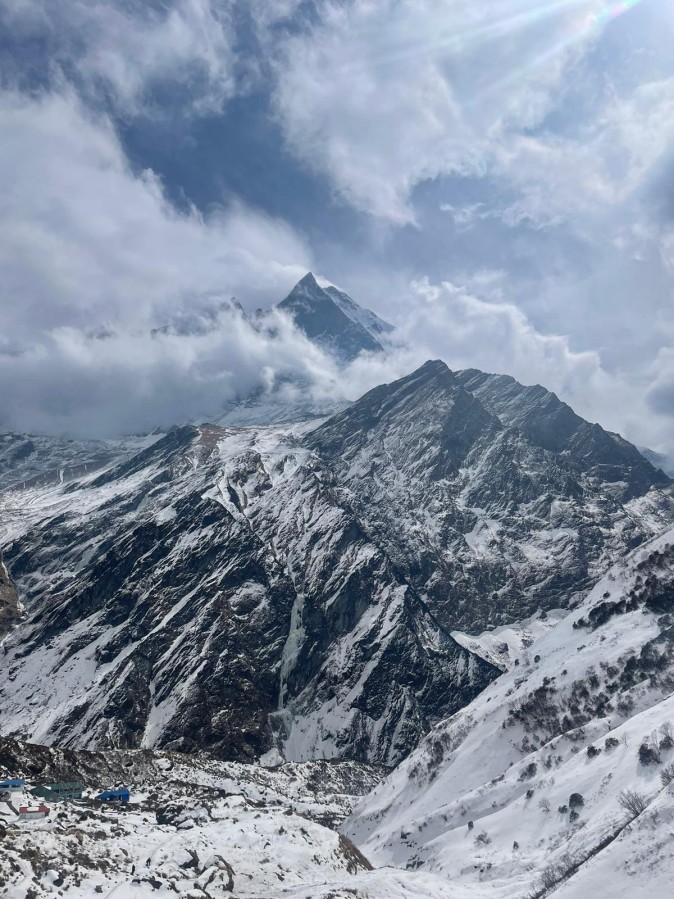
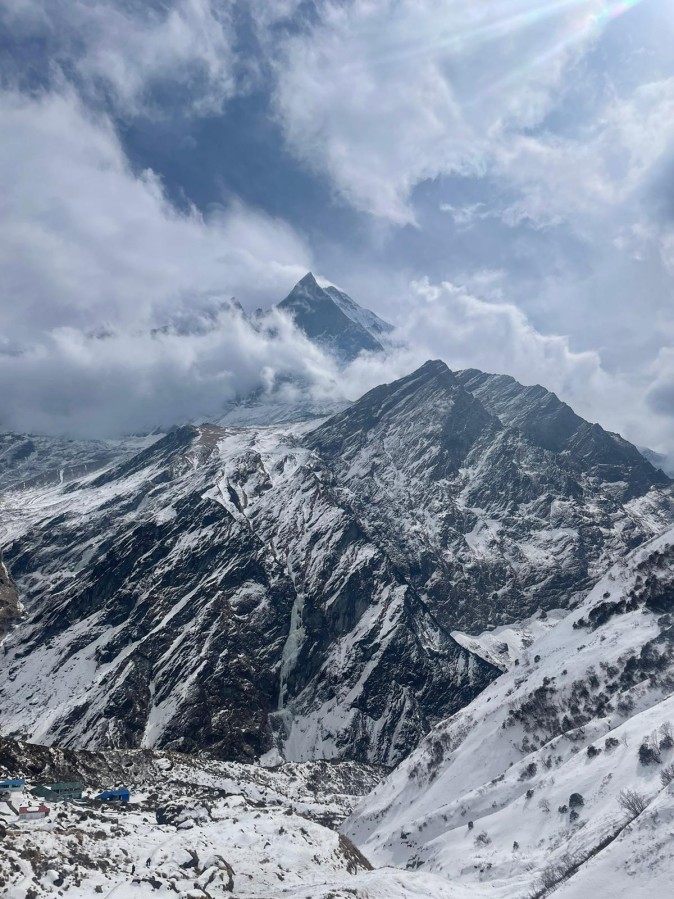
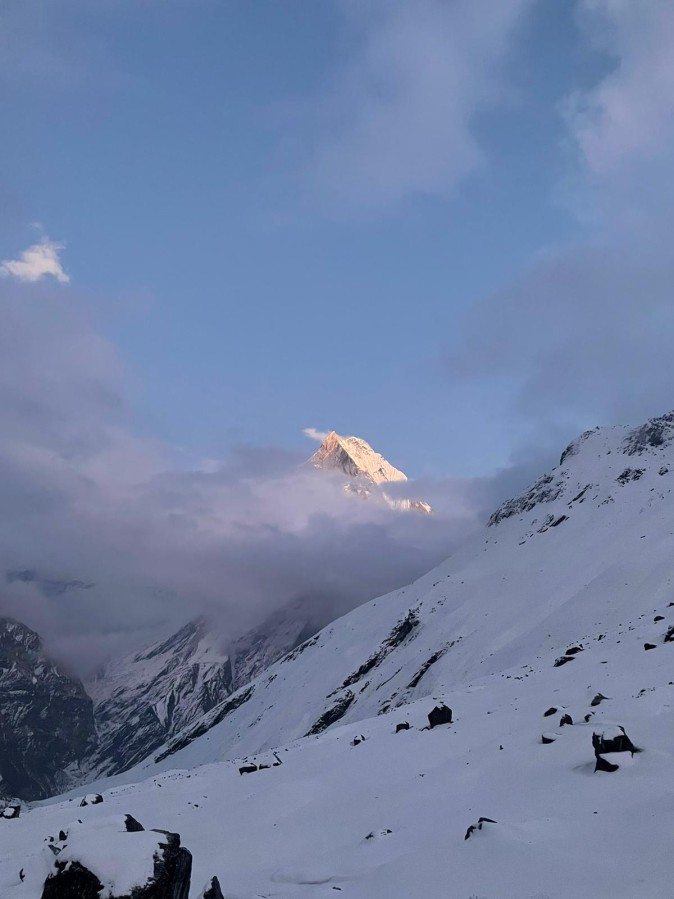
The trail leaves the road at Kande and climbs almost immediately into forest — rhododendron and oak at first, then moss-hung fir as the ridge narrows and the villages fall away. For two days you walk inside the trees, and then, somewhere above Forest Camp, the canopy just stops. What's left is open ridge, prayer flags snapping in the wind, and Machhapuchhre's fishtail summit close enough that it no longer looks like a photograph. Above High Camp, the Annapurna South face fills the western sky, and the trail narrows to a track of loose scree pushing toward 4,200 meters.
Mardi Himal has become one of Nepal's most-booked short treks for a simple reason: it delivers a genuine high-altitude Himalayan experience — glaciers, a 4,000-meter viewpoint, teahouse nights in the clouds — in less time and at lower cost than the region's longer classics. It sits inside the Annapurna Conservation Area, launches directly from Pokhara, and rarely takes more than six days round trip.
🏔️ Quick overview
| Detail | Information |
|---|---|
| Trek duration | 5–6 days round trip from Pokhara |
| Trek region | Annapurna (Annapurna Conservation Area) |
| Starting point | Kande (about 1 hour from Pokhara by road) |
| Ending point | Sidhing or Lumle (about 1.5–2 hours from Pokhara by road) |
| Highest trekking point | Mardi Himal Upper View Point, ~4,200–4,500 m |
| Approximate trekking distance | 35–40 km round trip |
| Difficulty | Moderate |
| Accommodation | Teahouses/lodges throughout |
| Best seasons | March–May (spring), September–November (autumn) |
| Required permits | ACAP + TIMS card |
| Guide requirement | Mandatory for all foreign nationals |
| Nearest major city | Pokhara |
| Typical trekking hours per day | 4–7 hours |
This is a practical 6-day itinerary. Many operators, including Orbit Nepal Adventure, compress it to 5 days for stronger trekkers, or add a rest day at Low Camp for better acclimatization. Actual pacing depends on your fitness, the weather, and teahouse availability at Low Camp and High Camp, which fill up quickly in October.
Insider Tip: The climb out of Kande is steep — pace yourself rather than starting fast.
Insider Tip: Longest forest stretch — carry snacks and water, teahouse options thin out here.
Insider Tip: A deliberately short day — rest, since elevation gain accelerates from here.
Insider Tip: Significant altitude gain despite the short distance — walk slowly, hydrate, watch for AMS symptoms.
Insider Tip: Start before dawn — cloud typically builds by mid-morning. Turn back if weather closes in; no shelter above High Camp.
Insider Tip: Trekking poles help on the loose, steep sections into Sidhing.
Note: If you're combining Mardi Himal with a longer Annapurna itinerary, our Annapurna Base Camp Trek itinerary shows how a similar route structure extends into a 7–8 day loop.
The route runs in a single, uncomplicated line: Pokhara → Kande → forest ridge → open alpine ridge → High Camp → Mardi Himal viewpoint → descent via Sidhing → Pokhara.
The first two days stay inside forest almost the entire time — rhododendron and oak below 2,500 m, giving way to moss-draped fir and rhododendron scrub as you approach Low Camp. This is the trek's most sheltered stretch: shaded, humid, and — in spring — thick with blooming rhododendron in red, pink, and white.
Past Low Camp, the trail breaks out onto open ridge. Trees thin to scrub, then disappear almost entirely by High Camp. From here the trek becomes exposed: wind picks up, temperatures drop fast after sunset, and the terrain turns to loose scree and rock underfoot. The push from High Camp to the Upper View Point is the trek's only technical stretch — steep, narrow in places, best done in the stable early-morning hours before cloud rolls in.
The descent via Sidhing avoids retracing your steps, dropping instead through a different set of Gurung villages and terraced hillside back toward the Mardi Khola valley and the Pokhara road.
Mardi Himal sits entirely inside the Annapurna Conservation Area, so its permit rules follow the same framework as the rest of the Annapurna region.
Annapurna Conservation Area Permit (ACAP) — the core permit for the trek, issued by the National Trust for Nature Conservation (NTNC). It covers every village on the route — Pothana, Pitam Deurali, Forest Camp, Low Camp, High Camp, and the Mardi Himal viewpoint. It's checked at the entry checkpoint near Kande and at intervals along the trail.
TIMS Card (Trekkers' Information Management System) — registers your route and emergency contact details with the Nepal Tourism Board and TAAN. Since the 2023 regulation change, independent ("Green") TIMS cards for solo foreign trekkers no longer exist; TIMS is now processed through your trekking agency alongside your guide booking.
Guide requirement — since April 1, 2023, Nepal has required all foreign nationals to trek with a licensed guide booked through a government-registered agency in every national park and conservation area, including Annapurna. This applies fully to Mardi Himal — solo, unguided trekking is no longer permitted for non-Nepali citizens on this route.
Where and who arranges permits: Both ACAP and TIMS are issued in Kathmandu or Pokhara through NTB-affiliated offices, or arranged directly by your trekking agency — the more common route now that guides are mandatory anyway.
Note: If you book through Orbit Nepal Adventure, we handle both permits as part of your package; you'll just need a passport copy and a passport-style photo in advance.
Checked on the trail? Yes, at the checkpoint near Kande and occasionally further along the route.
Restricted area permit? No — Mardi Himal isn't a restricted area, so no special permit beyond ACAP and TIMS applies, unlike Upper Mustang or Manaslu.
Nepali and SAARC vs. other foreign nationals: ACAP fees are lower for SAARC nationals than for other foreign nationals, and Nepali citizens are exempt from ACAP altogether. Exact fee amounts change periodically — verify current pricing directly with the Nepal Tourism Board or your agency before travel.
Note: For a full regional breakdown, see our complete Permits Required for Trekking in Nepal guide, or check current fee schedules directly on the Nepal Tourism Board's official site.
Permit rules aren't uniform across Nepal.
Annapurna routes — including Annapurna Base Camp and the Annapurna Circuit — use the same ACAP and TIMS system as Mardi Himal.
Everest region trekking requires the Sagarmatha National Park permit and Khumbu Pasang Lhamu Rural Municipality fee instead of ACAP.
Manaslu is more involved again: it's a restricted area requiring a special Manaslu Restricted Area Permit on top of conservation and guide requirements.
Upper Mustang carries its own restricted-area permit, priced per day.
Langtang uses Langtang National Park entry permits rather than ACAP.
Note: If you're planning more than one trek in Madri Himal region then go deeper to Permits Required for Annapurna Base Camp for combined Trek.
Spring (March–May) ✅ is peak rhododendron season — forests below Low Camp turn red and pink through March into April, visibility is generally strong, and daytime ridge temperatures are comfortable, though High Camp nights still drop well below freezing.
Autumn (September–November) ✅ is the clearest window of the year. Post-monsoon skies deliver the sharpest mountain visibility, trails are dry and firm, and High Camp and Low Camp lodges fill up fastest — book ahead if trekking in October.
Winter (December–February) ⚠️ is possible but colder and quieter. Snow can close the High Camp–viewpoint section after heavy falls, and some upper teahouses reduce services.
Monsoon (June–August)❌ is the least reliable season. Rain, leeches on the lower forest trail, and persistent cloud cover blocking mountain views make this the season to avoid unless you specifically want a quiet, green trek.
Note: For a broader seasonal comparison, see our Best Time for Annapurna Base Camp Trek guide — the same weather patterns largely apply to Mardi Himal.
Mardi Himal is rated moderate — harder than a beginner walking holiday, but well within reach of anyone with reasonable fitness and no serious pre-existing health conditions.
Can beginners do it? Yes, provided you arrive with a baseline of regular walking or hiking fitness and follow the recommended acclimatization pacing. It's a common first Himalayan trek for exactly this reason.
The trek's highest point sits around 4,200–4,500 m, high enough that altitude sickness is a real, if manageable, risk.
Watch for: headache, nausea, dizziness, and unusual fatigue above 3,000 m — the classic early signs of acute mountain sickness (AMS).
Note: Descend immediately if symptoms worsen rather than pushing through
Accommodation & Food
Costs vary depending on whether you trek with a hired guide independently or book a full package. Since 2023, "independent" no longer means unguided — it means arranging your own guide, permits, and accommodation separately rather than through an all-inclusive package.
Typical cost components: ACAP + TIMS permits, guide (and porter if hired), ground transportation (Pokhara–Kande, Sidhing–Pokhara), teahouse accommodation, meals, hot showers and device charging, travel insurance covering trekking to 4,500 m, personal spending, and guide/porter tips.
Note: See our dedicated Mardi Himal Trek Package guide for a current, itemized breakdown.
Note: For a longer, checklist-format version, see our Mardi Himal Trek Packing List or the broader Nepal trekking packing list.
| Factor | Mardi Himal | Annapurna Base Camp |
|---|---|---|
| Duration | 5–6 days | 7–8+ days |
| Difficulty | Moderate | Moderate to challenging |
| Highest point | ~4,200–4,500 m | ~4,130 m |
| Scenery | Ridge views of Machhapuchhre, Annapurna South | Amphitheater views inside the Sanctuary |
| Crowds | Lighter | Busier in peak season |
| Beginner-friendly | Yes | Yes, slightly more stamina needed |
Note: Both routes sit in the same conservation area with similar permit and guide rules. See our Annapurna Base Camp Trek itinerary for the fuller Sanctuary route, or ask about a Mardi Himal and Annapurna Base Camp combination itinerary.
Poon Hill is shorter (4–5 days) and tops out around 3,210 m — a sunrise walk rather than a genuine high-altitude push. Mardi Himal goes higher and further into alpine terrain.
See our Ghorepani Poon Hill Trek guide for the easier, family-friendly option.
The Annapurna Circuit is a multi-week trek crossing Thorong La at over 5,400 m — a much bigger commitment, with far more villages and elevation range.
Langtang Valley offers a similar week-long timeframe but a glacial-valley landscape and slightly higher optional side trips (Tserko Ri, ~4,984 m).
Everest Base Camp is longer (12–14 days), higher (5,364 m), and requires a Lukla flight — a bigger commitment in time, altitude, and cost.
Note: Trekkers wanting a longer cultural immersion, higher passes, or more varied landscapes are usually better served by the Annapurna Circuit, Manaslu, or Everest Base Camp instead.
Q. How many days is the Mardi Himal Trek?
➤ Most itineraries run 5–6 days round trip from Pokhara, though longer versions exist for slower pacing or added acclimatization.
Q. Is the Mardi Himal Trek difficult?
➤ It's rated moderate — manageable for reasonably fit beginners, with the steepest and highest sections in the final two days.
Q. What is the highest point of the Mardi Himal Trek?
➤ The Upper View Point, at approximately 4,200–4,500 m.
Q. Do I need a permit for the Mardi Himal Trek?
➤ Yes — ACAP and a TIMS card are both required.
Q. Is a guide mandatory for Mardi Himal?
➤ Yes. Since April 2023, all foreign nationals must trek with a licensed guide through a registered agency.
Q. What permits are required for the Mardi Himal Trek?
➤ ACAP and TIMS. No restricted-area permit is needed.
Q. What is the best month for the Mardi Himal Trek?
➤ October and April are generally the strongest months for visibility and comfortable temperatures.
Q. Can beginners do the Mardi Himal Trek?
➤ Yes, with reasonable fitness and by following the itinerary's acclimatization pacing.
Q. How much does the Mardi Himal Trek cost?
➤ Costs depend on package inclusions, guide/porter arrangements, and season — see our Mardi Himal Trek Cost guide.
Q. Can I do the Mardi Himal Trek in winter?
➤ Yes, though expect colder temperatures, possible snow above High Camp, and reduced teahouse services.
Q. Is the Mardi Himal Trek suitable during monsoon?
➤ It's possible but not recommended — persistent cloud cover blocks views, and the lower trail can have leeches.
Q. How far is Mardi Himal from Pokhara?
➤ Kande is roughly an hour's drive from Pokhara; the full round trip covers about 35–40 km of trekking.
Q. Is Mardi Himal better than Annapurna Base Camp?
➤ Neither is objectively better — see our Mardi Himal vs. Annapurna Base Camp comparison.
Q. What should I pack for the Mardi Himal Trek?
➤ Layered clothing, a sleeping bag rated to at least -10°C, trekking poles, and standard high-altitude gear — see the packing list above.
Q. Can Mardi Himal and Annapurna Base Camp be combined?
➤ Yes — some itineraries link the two into a roughly 10–12 day combined trip. Ask us about a Mardi Himal and Annapurna Base Camp combination itinerary.
Ready for your Madri Himal Trek ?Contact Orbit Nepal Adventure today for customized itineraries for easier and adventurous trek.
📲 Contact us directly on WhatsApp: Chat with us on WhatsApp
🌐 Visit: orbitnepaladv.com
📧 Email: orbitnepaladv@gmail.com
💬 Whatshapp: 977-9841766021
Our Package : Madri Himal Trek